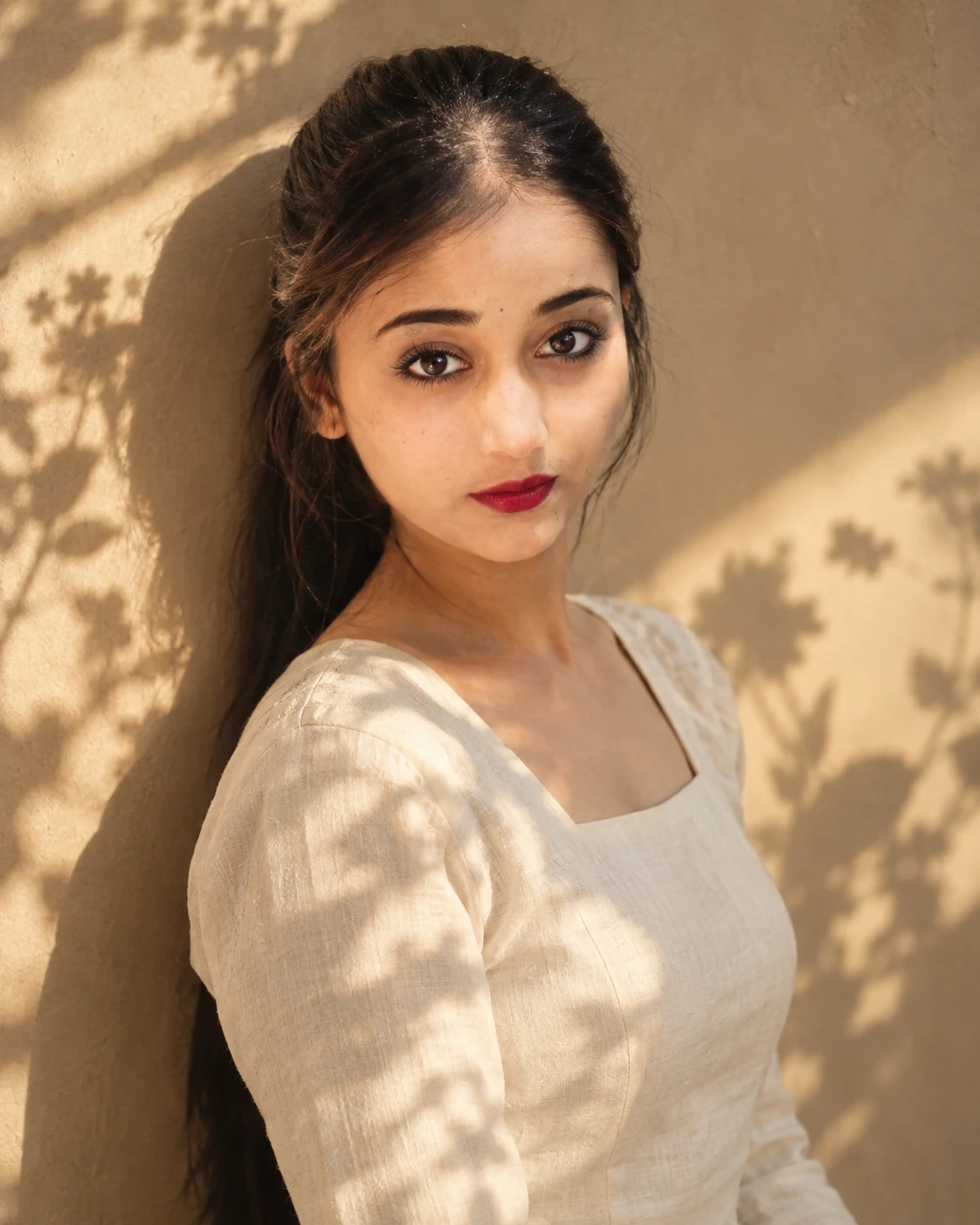
Shadow Flower Editorial Portrait
Create a realistic editorial portrait where delicate flower shadows shape the scene while your real face, skin texture, and identity stay intact.
Using the uploaded photo, create a realistic fine-art editorial portrait built around projected flower and leaf shadows. KEEP - Keep the person’s exact face structure, including jaw shape, cheek structure, nose shape, lips, and facial proportions. Keep the exact eye shape and natural eye colour from the uploaded photo. Keep the original skin tone, natural skin texture, pores, freckles, marks, and small facial details visible in the reference. Keep the original hairline, hair density, hairstyle, and visible baby hairs. Keep facial hair exactly where it exists in the uploaded photo, without adding, removing, or reshaping it. Keep the person’s natural body proportions, shoulder width, neck length, and overall recognizable identity unchanged. CHANGE - Change the wardrobe to a simple structured ivory linen blouse with natural fabric folds and a matte cotton texture. Change the background to a warm beige matte plaster wall with subtle uneven surface marks. Change the pose to a relaxed three-quarter portrait with the shoulders naturally angled and the face turned slightly toward the camera. Change the lighting to late-afternoon sunlight coming from camera-left. Change the colour treatment to warm beige, ivory, muted olive and soft brown tones. Do not place visible flowers in the scene; only their shadows should appear. SCENE - Place the person beside a warm matte plaster wall in a quiet minimalist interior during late afternoon. Behind the subject, create soft silhouettes of stems, leaves and small flowers as if an unseen botanical arrangement is positioned outside the frame. Keep the projected shadows slightly blurred at their edges, with some crossing the wall and lightly touching the blouse. The real flowers must remain completely outside the visible frame. LIGHT - Use directional natural sunlight from camera-left, slightly above eye level. Keep the light soft but directional, with gentle falloff across the face so the shadow pattern does not flatten facial features. Use approximately 4300K warm-neutral daylight. CAMERA - Capture at 85mm, f/2.2, camera at chest height, with the face sharply focused and the plaster wall gradually softened behind the subject. GRADE - Apply warm editorial colour grading with restrained contrast, creamy highlights, natural skin tones, slightly muted shadows, and subtle fine-grain film texture inspired by modern fine-art portrait photography. OUTPUT - Create a vertical 4:5 composition at 2048 × 2560 resolution with realistic skin detail and clean edge definition. DO-NOT - No face slimming, no skin whitening, no changed eye colour, no plastic smoothing, no invented jewellery or tattoos, no visible flowers, no artificial facial reshaping, and no duplicated shadow patterns.
Photo Guide
- Use a sharp, high-resolution portrait where both eyes and the hairline are visible.
- Choose a front or three-quarter face photo with natural facial proportions.
- Soft daylight works best because the warm shadow lighting blends naturally.
- Keep the forehead, cheeks, jawline, hair and shoulders unobstructed.
- Avoid existing heavy face filters because they can weaken identity matching.
- The key failure is visible flowers; only their projected shadows should appear.
How to Build
- 1Open Gemini and upload one clear, high-resolution reference photo.
- 2Paste the full Shadow Flower prompt without changing the KEEP section.
- 3Choose image generation and keep the output in a 4:5 portrait ratio.
- 4Use the original photo as the identity reference, not just a text description.
- 5Check that flower shapes appear only as projected shadows.
- 6If the first result is wrong, regenerate and stress “no visible flowers, shadows only.”
Pro Tips
- Use a photo with even facial detail so the directional light stays believable.
- Keep both eyes visible so the 85mm portrait preserves facial identity.
- Choose neutral clothing in the reference so the ivory wardrobe replaces cleanly.
- Avoid sunglasses because they remove the eye details needed for identity matching.
- Use a natural expression so the projected shadows do not look digitally pasted on.
Share This Prompt
About the Author
Naziya
Creative AI writer at MFDA, sharing trendy photo-editing prompts and fresh ideas for beautiful, stylish AI images.