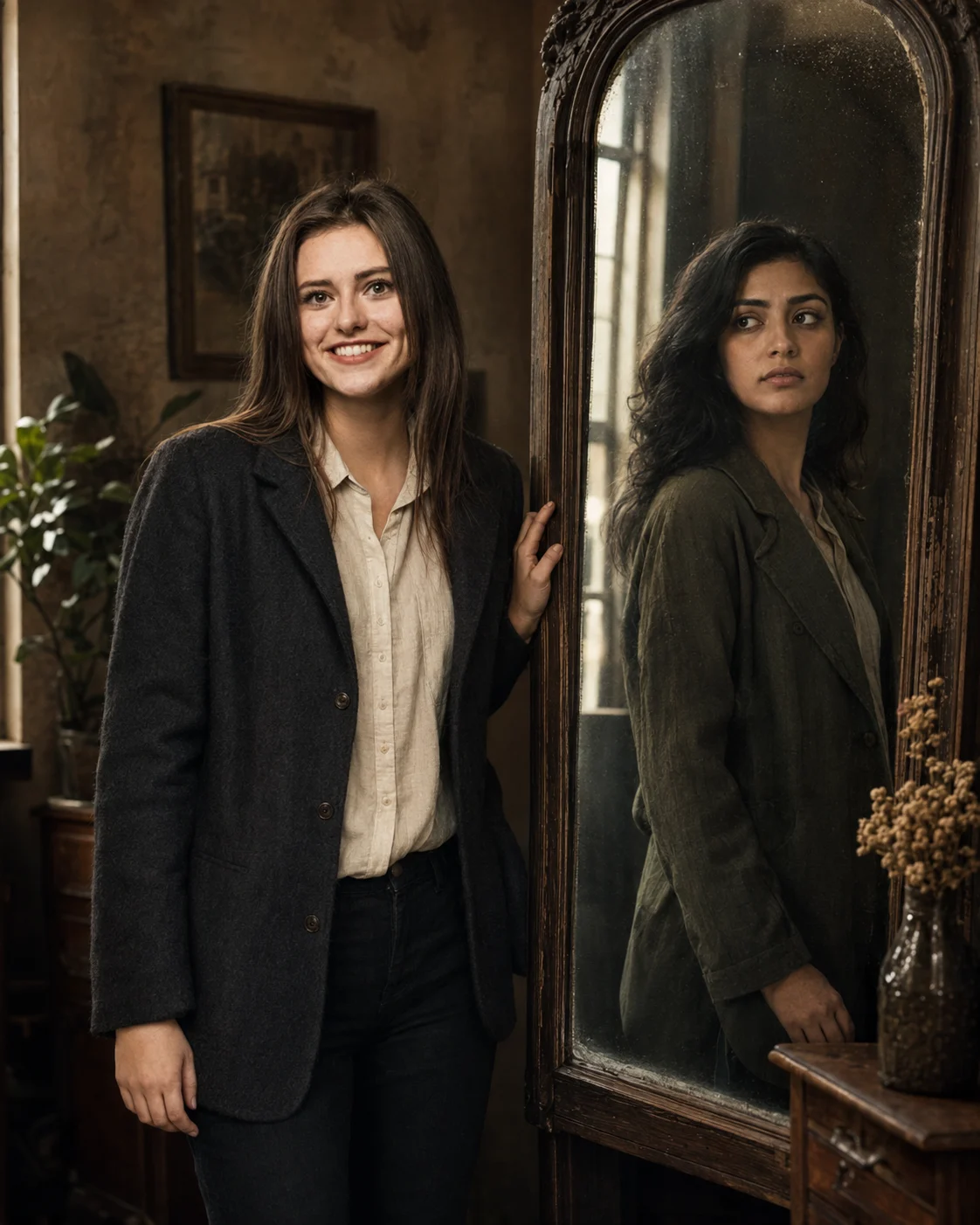
Reflection Showing a Different Person in a Mirror
Create a realistic mirror portrait where you stay unchanged while the reflection becomes a visibly different person with a cinematic editorial mood.
Using the uploaded photo, create a photorealistic cinematic portrait of the same person standing naturally beside a large antique mirror, while the mirror reflection shows a completely different person. KEEP - Keep the uploaded person's face structure, eye shape and eye colour, skin tone and natural skin texture, hairline, facial hair if present, and body proportions exactly as shown. Keep their recognizable identity unchanged. Preserve natural facial asymmetry, nose shape, lips, jawline, cheeks, and visible features from the source photo. CHANGE - Change the wardrobe to a dark charcoal wool jacket over a muted cream cotton shirt, with realistic fabric texture and natural folds. Change the environment to an elegant vintage interior with aged wood, a tall antique mirror, and subdued brown and beige surfaces. Change the pose only enough to place the person naturally beside the mirror, with one hand resting near the mirror frame. Change the lighting to soft late-afternoon window light. Change the colour grade to warm cinematic neutrals with controlled contrast. For the reflection, create a clearly different adult person with a different face structure, eye shape, hairstyle, hairline, skin tone, and facial expression. Give the reflected person a deep olive linen jacket and a different overall appearance. Keep the reflection's body position aligned with the real person's pose so it reads as an intentional mirror effect, not a second person standing behind the glass. SCENE - Place the subject indoors during late afternoon, beside a tall antique mirror with a worn wooden frame. Keep the background softly blurred at approximately f/1.8 depth of field, while the subject and mirror remain sharply readable. Show realistic glass depth, subtle frame shadows, and believable reflections. LIGHT - Place the main light from a large window 45 degrees to the subject's front-left, using soft warm daylight around 4800K. Keep the same light direction across the subject and reflection so neither face looks pasted into the scene. CAMERA - Shoot at 85mm, f/1.8, camera height at chest level, with natural perspective and moderate compression. Keep facial proportions realistic without wide-angle distortion. GRADE - Use warm beige and brown tones, gentle highlight roll-off, medium contrast, slightly muted saturation, and a subtle editorial film texture. OUTPUT - Create a vertical 4:5 composition at 2048 × 2560 resolution, with the person and mirror fully readable. DO-NOT - Do not slim the face, whiten the skin, change eye colour, smooth skin plastically, invent jewellery or tattoos, alter body proportions, or accidentally copy the original face onto the reflection.
Photo Guide
- Use a sharp photo of at least 1500px on the longest side.
- A front or three-quarter angle keeps the facial structure easy to preserve.
- Use soft daylight so natural skin texture remains visible.
- Keep the full face, hairline, and shoulders clearly visible.
- A dark indoor selfie with harsh flash can weaken the warm mirror effect.
How to Build
- 1Gemini: upload the photo and paste the prompt exactly as written.
- 2Choose image generation with a 4:5 portrait output.
- 3Keep the reference image strength high for identity preservation.
- 4Generate one image first, then inspect the face and reflection separately.
- 5If the first result is wrong, regenerate and reinforce the KEEP and reflection rules.
Pro Tips
- Use a photo with visible hairline so the original identity stays stable.
- Choose natural daylight, so skin texture matches the cinematic lighting.
- Keep both shoulders visible, so the mirror pose remains anatomically consistent.
- Use a clear mirror photo reference, so the reflection reads as glass rather than a duplicate.
- Avoid sunglasses, so the original eye shape and colour remain accurate.
Share This Prompt
About the Author
Naziya
Creative AI writer at MFDA, sharing trendy photo-editing prompts and fresh ideas for beautiful, stylish AI images.