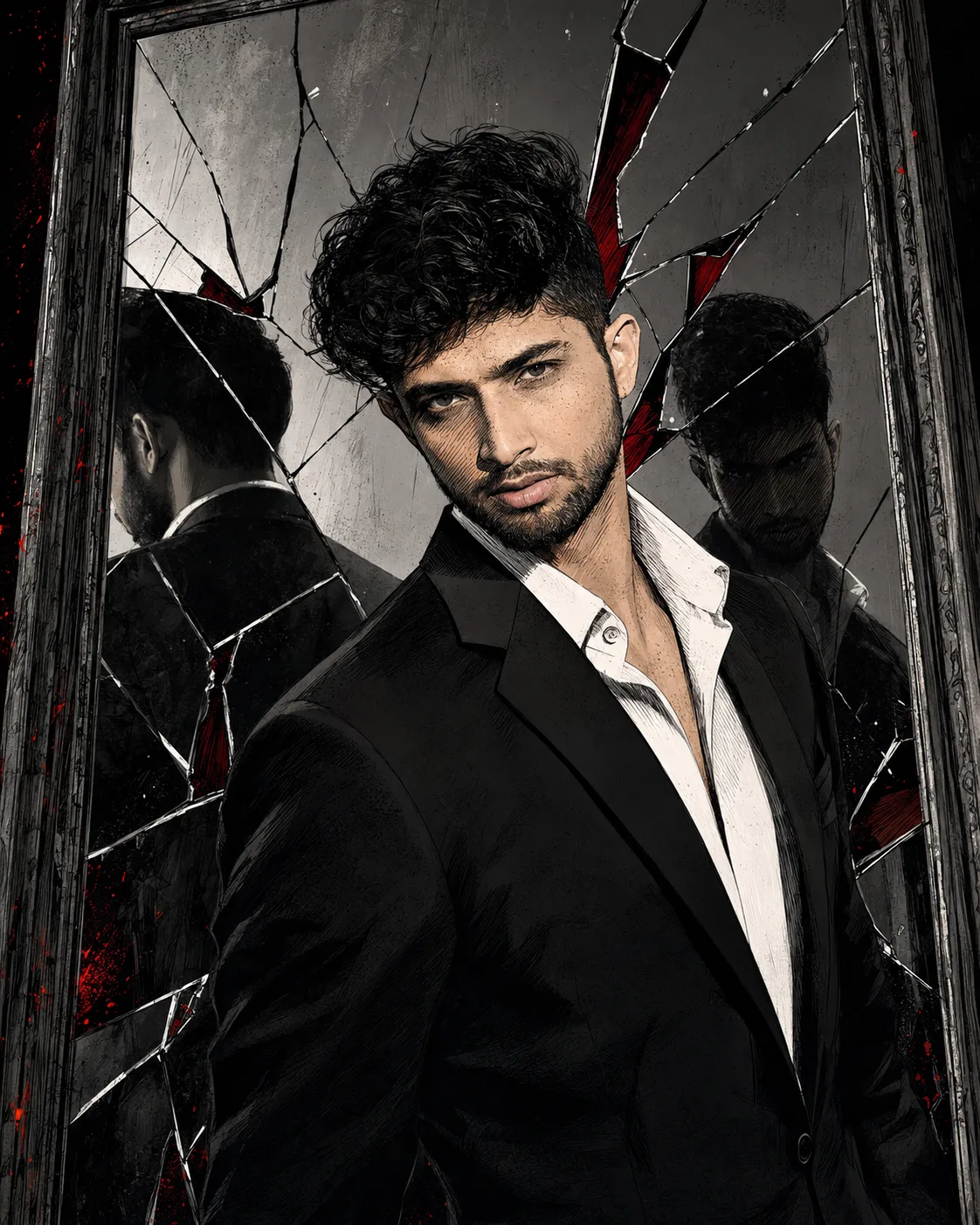
Broken Mirror Graphic Novel Portrait
Turn your photo into a gritty broken-mirror comic portrait with an unchanged face, black suit, monochrome ink shading, and crimson mirror cracks.
Using the uploaded photo, create a vertical 4:5 chest-up graphic-novel character portrait beside a large shattered mirror. KEEP - Keep the exact face structure, natural jaw and cheek shape, eye shape and eye colour, nose and lip proportions, skin tone and visible skin texture, hairline, hairstyle, facial hair if present, and natural body proportions from the uploaded photo. Preserve the person's recognizable identity and age appearance. Do not reinterpret facial features through comic stylization. CHANGE - Change the wardrobe to a sharply tailored black suit jacket with structured shoulders and subtle wool fabric texture, worn over a crisp white dress shirt with an open collar. Change the pose to a controlled three-quarter chest-up stance, with the body turned slightly away while the face remains directed toward the viewer. Change the background into a large shattered wall mirror with irregular glass fragments. Change the lighting to strong directional side lighting. Change the visual treatment to black, white and grayscale with selective deep crimson accents. SCENE - Place the subject in front of a tall fractured mirror in a dark editorial studio setting. The mirror should occupy most of the background, with several broken sections reflecting fragmented portions of the subject's silhouette. Keep the mirror reflections slightly darker and less detailed than the real subject. Add small crimson-red accents only inside selected mirror cracks and a few nearby ink marks. LIGHT - Use soft but directional light from camera-left, slightly above eye level, with neutral daylight around 5000K. Let one side of the face receive clean highlights while the opposite cheek and jaw fall into controlled ink shadows, matching the face naturally to the scene. CAMERA - Use an 85mm lens at f/2.8, camera positioned at chest height, with moderate compression and shallow depth of field. Keep the real face sharper than the distant mirror fragments. GRADE - Convert the character and environment to high-contrast monochrome with engraved cross-hatching, stippling, fine ink lines and subtle paper grain. Use deep crimson only for selected mirror cracks and tiny splashes. OUTPUT - Create a vertical 4:5 image at 4096 × 5120 resolution, with crisp poster-ready edges and no text. DO-NOT - no face slimming, no skin whitening, no changed eye colour, no plastic smoothing, no invented jewellery or tattoos.
Photo Guide
- Use a sharp, high-resolution portrait where both eyes and the hairline are visible.
- Choose a front or slight three-quarter photo with the face unobstructed.
- Even facial lighting works best so the ink shadows can be added naturally.
- Keep facial hair visible if present; do not use a heavily filtered selfie.
- A visible forehead and hairline help prevent the mirror reflections from drifting.
- Avoid sunglasses or extreme shadows, which can distort the face identity.
How to Build
- 1Open Gemini and choose image generation with the highest quality available.
- 2Upload one clear face photo as the identity reference.
- 3Paste the full prompt and keep the output ratio at 4:5.
- 4Generate the image without adding extra style instructions afterward.
- 5Check the real face against your photo before accepting the result.
- 6If the face changes, regenerate using the same photo and prompt unchanged.
Pro Tips
- Use a neutral expression so the serious poster expression stays believable.
- Keep the original hairline visible so mirror fragments do not invent hair.
- Use a sharp source photo so engraved facial details remain recognizable.
- Avoid busy source backgrounds so the shattered mirror stays visually dominant.
- Choose a photo with natural skin texture so cross-hatching does not look plastic.
Share This Prompt
About the Author
Naziya
Creative AI writer at MFDA, sharing trendy photo-editing prompts and fresh ideas for beautiful, stylish AI images.