Raksha Bandhan prompts for Google Gemini

I’m an AI prompt writer who tests image prompts for everyday photo editing, especially Indian festival portraits where keeping the original face matters. I tested many Raksha Bandhan variations in Google Gemini, changing outfits, rooms, lighting, poses, and camera framing until I found five that held up well on repeated runs.
Raksha Bandhan prompts for Google Gemini
One thing I noticed was that face consistency was stronger when I described the original facial structure explicitly instead of relying on phrases like “same face.” I also found that small Indian details, such as a rakhi thali, marigold flowers, kumkum, and traditional fabrics, made the festival setting feel much more believable. I’ve kept each prompt ready to paste with an uploaded reference photo. Start with the first one if you want a warm, traditional Raksha Bandhan family portrait.
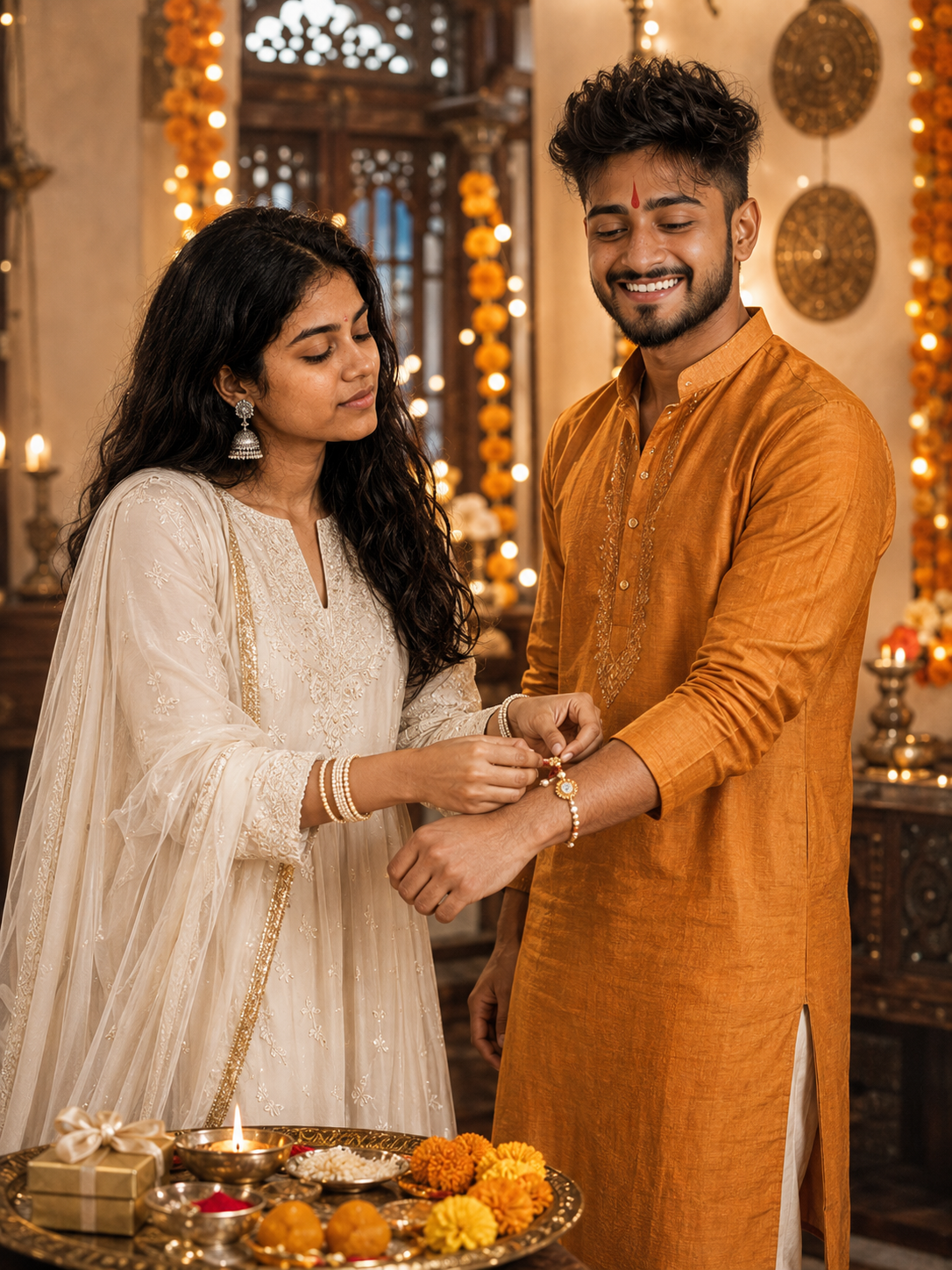
Brother And Sister Celebrating Raksha Bandhan In A Traditional Home
I ran this version several times and found that the uploaded faces stayed recognizable when I kept the expressions natural and avoided heavy beauty styling. I was surprised by how much the marigold decorations and warm window light changed the festive feel without making the portrait look staged.
The Prompt
FACE MATCHING INSTRUCTIONS Use the uploaded reference photo as the identity source for both siblings and preserve each person's exact facial structure, including face shape, eye shape and placement, eyebrows, nose, lips, jawline, ears, skin tone, natural facial proportions, and individual asymmetry. Keep both people clearly recognizable as the same individuals in the reference photo. Do not beautify, smooth, reshape, or redesign either face. FACE CLARITY Keep realistic visible pores, fine facial hairs, natural skin texture, subtle tonal variation, and authentic complexion details. Do not apply a beauty filter, artificial skin smoothing, excessive makeup retouching, or porcelain-like skin. SCENE Create a warm Raksha Bandhan morning scene inside a tasteful Indian family home in Ahmedabad, with soft daylight entering through a nearby window. Include a small decorated rakhi thali containing colourful rakhis, kumkum, rice grains, sweets, and a few marigold flowers on a wooden table. SUBJECT Show an adult Indian brother and adult Indian sister together during a Raksha Bandhan celebration. The sister has a gentle affectionate smile while looking toward her brother, and the brother looks at her with a relaxed, warm expression as she prepares to tie the rakhi. FACE AND LOOK DETAILS Preserve the natural hairstyle and hair density from the reference photos while making the grooming neat and realistic. Use minimal makeup for the sister, with natural lips and subtle kajal if already compatible with her appearance, while keeping the brother naturally groomed with realistic facial hair if present in the reference. POSE DETAILS Have the sister sit or stand slightly beside her brother while holding his wrist gently with one hand and positioning the rakhi with the other. The brother should keep his shoulders relaxed, one hand resting naturally near the table, with both siblings looking toward each other rather than directly posing at the camera. Keep the interaction candid and emotionally natural, never stiff. OUTFIT DETAILS Dress the sister in a rich mustard-yellow silk Anarkali with subtle traditional embroidery, small jhumka earrings, delicate bangles, and simple traditional footwear. Dress the brother in an ivory cotton-silk kurta with a muted maroon Nehru jacket and traditional mojri footwear. Keep fabrics realistic with visible weave and natural folds. BACKGROUND DETAILS Keep the immediate rakhi table, marigold flowers, and nearby festive decorations reasonably sharp while allowing the deeper living-room background to fall softly out of focus. Include subtle Indian home details without adding distracting objects. LIGHTING Use warm natural morning window light coming from the left side, creating gentle highlights on the faces and soft shadows on the opposite side. Keep the lighting flattering but realistic, with no harsh studio flash or artificial glow. CAMERA Create a medium portrait framed from approximately the waist upward with a natural 50mm lens feel, realistic perspective, moderate depth of field, and sharp focus on both faces and the rakhi interaction. COLOUR GRADE Use a warm festive palette of mustard yellow, ivory, maroon, muted orange, natural wood, and soft green, with realistic skin tones and restrained contrast. OUTPUT Generate a vertical 4:5 portrait at high resolution, with detailed facial texture and clean edges suitable for an Instagram or Facebook festival post. AVOID Avoid extra fingers, duplicated hands, warped wrists, incorrect rakhi placement, distorted jewellery, melted fabric patterns, plastic skin, excessive skin smoothing, face reshaping, mismatched facial identities, unnatural smiles, text artefacts, logos, watermarks, and artificial-looking eyes.
✦ Curated by MFDA
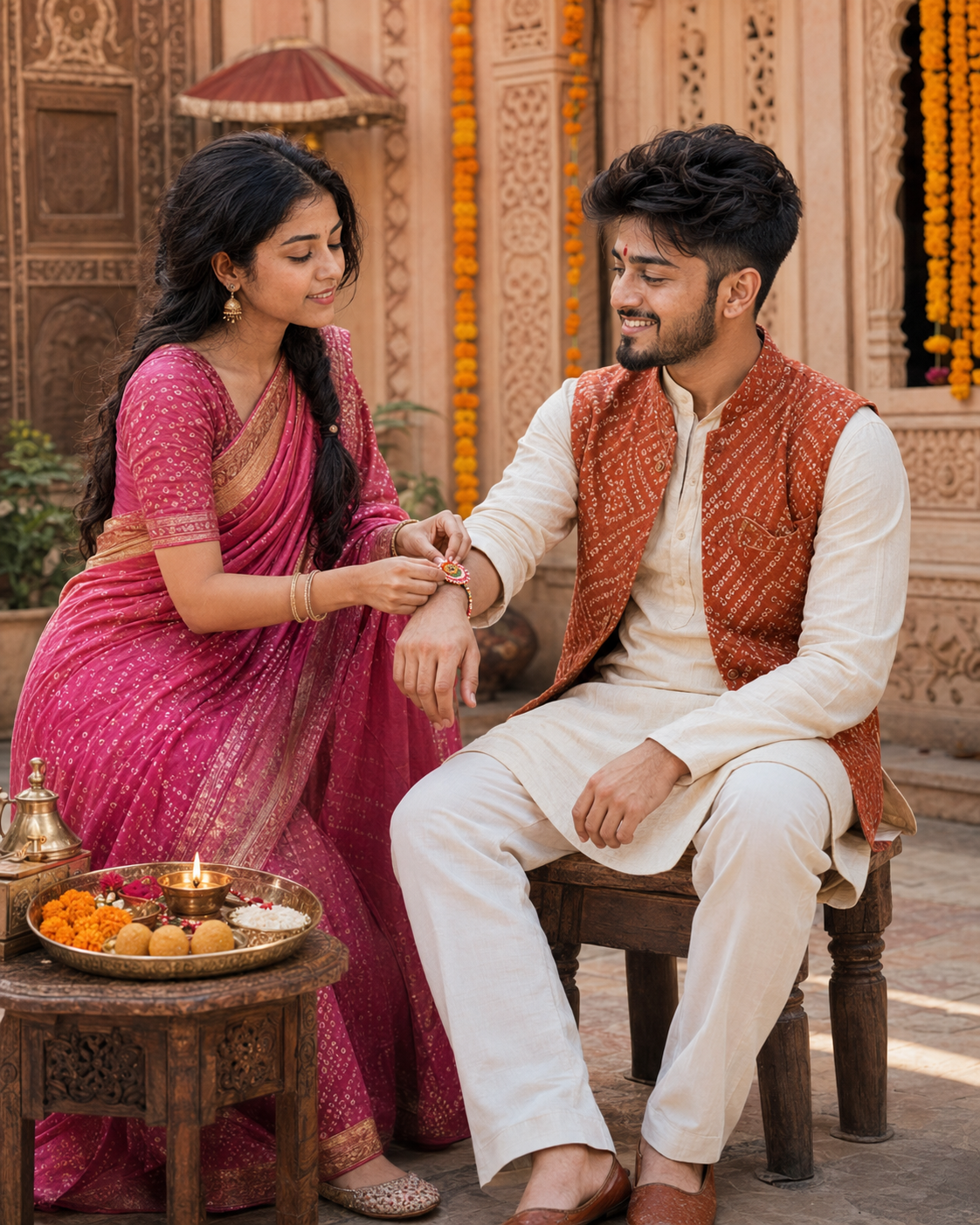
Sister Tying Rakhi To Brother In A Jaipur Courtyard
I tested this courtyard version and the faces remained fairly stable when I kept the camera framing close enough for both faces to stay prominent. I liked the result most when the background stayed slightly soft because the colourful Jaipur details otherwise competed with the siblings.
The Prompt
FACE MATCHING INSTRUCTIONS Use the uploaded reference photo as the strict identity reference for both siblings and preserve their exact face shape, eyes, eyebrows, nose, lips, jawline, ears, skin tone, natural proportions, and individual facial asymmetry. Maintain the recognizable identity of each person without changing age or facial structure. Do not beautify, smooth, reshape, or redesign either face. FACE CLARITY Show visible pores, fine hairs, natural skin texture, realistic complexion variation, and subtle facial details. Do not use a beauty filter or plastic-looking skin treatment. SCENE Place the siblings in a traditional Jaipur-style haveli courtyard during a late afternoon Raksha Bandhan celebration. Include a carved sandstone wall, a small wooden stool, marigold garlands, a decorated rakhi thali, kumkum, rice grains, and traditional Indian sweets. SUBJECT Show an adult Indian sister tying a rakhi around her adult brother's wrist. The sister should have a warm, slightly emotional smile while the brother looks at her with an affectionate, relaxed expression. FACE AND LOOK DETAILS Keep each person's natural hairstyle, hairline, hair density, and grooming from the uploaded references. Give the sister very light traditional makeup with subtle kajal and natural lips, while keeping the brother's grooming simple and authentic, including facial hair only if present in the reference. POSE DETAILS Position the brother seated on a low wooden stool with his forearm extended naturally toward his sister. Have the sister stand or sit slightly beside him, using both hands carefully around his wrist while tying the rakhi. Keep their shoulders relaxed and their gaze directed toward each other or toward the rakhi, creating a candid moment rather than a formal pose. OUTFIT DETAILS Dress the sister in a deep pink Bandhani silk saree with a delicate golden border, small jhumkas, thin bangles, and traditional mojri. Dress the brother in a cream kurta-pajama with a rust-orange Bandhani Nehru jacket and simple traditional footwear. Make the Bandhani patterns and fabric folds physically realistic. BACKGROUND DETAILS Keep the siblings and rakhi interaction sharp while the carved haveli architecture and distant marigold decorations become softly blurred. Preserve enough architectural detail to clearly suggest Jaipur without overcrowding the frame. LIGHTING Use warm late-afternoon sunlight entering from one side of the courtyard, producing soft directional highlights and gentle natural shadows. Keep the skin tones accurate and avoid dramatic artificial rim lighting. CAMERA Use a medium close portrait with a 50mm lens feel, eye-level camera position, natural perspective, moderate background separation, and both faces clearly visible in sharp focus. COLOUR GRADE Use dusty pink, cream, rust orange, sandstone beige, muted gold, and natural skin tones with a warm but realistic festival finish. OUTPUT Generate a vertical 4:5 high-resolution portrait with crisp facial details, realistic fabric texture, and enough surrounding space to show the Jaipur courtyard setting. AVOID Avoid extra fingers, duplicated hands, warped wrists, broken rakhi threads, distorted jewellery, unrealistic Bandhani patterns, plastic skin, face changes, exaggerated makeup, artificial eyes, text artefacts, logos, watermarks, and overly dramatic HDR effects.
✦ Curated by MFDA
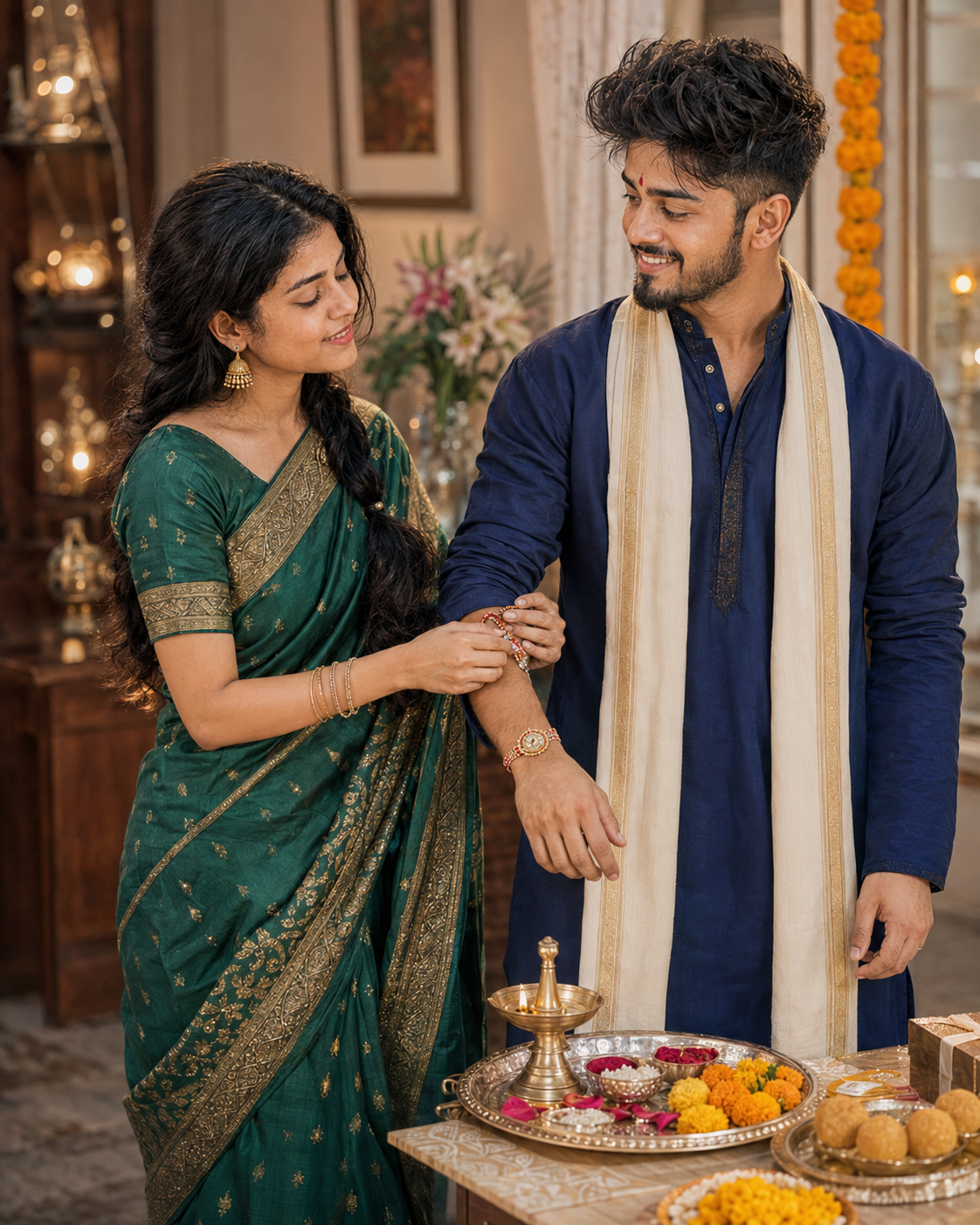
Brother Sister Raksha Bandhan Portrait With Elegant Festive Outfits
I ran this setup with several uploaded photos and found that the formal composition worked best when both siblings had relaxed shoulders instead of a perfectly symmetrical pose. The warm indoor lighting also gave the jewellery and embroidered clothing more depth than cooler lighting did.
The Prompt
FACE MATCHING INSTRUCTIONS Treat the uploaded photos as the exact identity reference for both siblings and preserve their original face shape, eyes, eyebrows, nose, lips, jaw, ears, skin tone, facial proportions, and natural asymmetry. Keep each sibling immediately recognizable as the person in the reference photo. Do not beautify, smooth, reshape, or redesign either face. FACE CLARITY Retain realistic pores, fine facial hairs, authentic skin texture, tiny complexion variations, and natural facial detail. No beauty filter, artificial smoothing, waxy skin, or excessive retouching. SCENE Create an elegant Raksha Bandhan portrait inside a refined Indian home decorated for the festival. Place a brass diya, a silver rakhi thali, kumkum, rice grains, small bowls of mithai, and fresh marigold flowers on a nearby console table. SUBJECT Show an adult Indian sister and adult Indian brother standing together after the rakhi ceremony. The sister should have a soft genuine smile while looking toward her brother, and the brother should respond with a subtle affectionate smile. FACE AND LOOK DETAILS Preserve the original hairstyles and hairlines from the uploaded references, with neat but realistic grooming. Keep the sister's makeup understated and traditional, using natural skin texture and minimal kajal, while keeping the brother's grooming natural and consistent with his reference appearance. POSE DETAILS Have the sister gently hold the brother's forearm near the newly tied rakhi while he rests one hand naturally at his side and lightly touches the edge of the rakhi thali with the other. Keep their shoulders slightly angled toward one another and their expressions relaxed. Make the pose feel like a real family photograph taken between conversations. OUTFIT DETAILS Dress the sister in an emerald-green silk saree with a fine gold zari border, delicate jhumka earrings, thin gold bangles, and simple sandals. Dress the brother in a navy-blue silk kurta with a cream stole and brown leather mojri. Make the silk, zari, and jewellery physically detailed without exaggeration. BACKGROUND DETAILS Keep the siblings, clothing, and rakhi visible in sharp detail while the decorated living-room background becomes softly blurred. Include warm wooden furniture, subtle floral decoration, and a few out-of-focus festive lights. LIGHTING Use warm indoor light combined with soft daylight from a nearby window, with illumination falling gently across both faces from the front-left. Keep shadows soft and natural, preserving facial texture rather than flattening it. CAMERA Use an eye-level three-quarter portrait with a 70mm portrait-lens feel, moderate compression, shallow but sufficient depth of field for both faces, and a balanced waist-up composition. COLOUR GRADE Use emerald green, navy blue, cream, antique gold, warm brown, and natural skin tones with a polished but realistic Indian festive colour grade. OUTPUT Generate a vertical 4:5 high-resolution portrait with realistic skin detail, sharp faces, accurate jewellery, natural fabric texture, and clean photographic rendering. AVOID Avoid extra fingers, malformed hands, warped jewellery, duplicated accessories, broken embroidery, plastic skin, excessive smoothing, facial reshaping, unnatural smiles, mismatched skin tones, text artefacts, logos, watermarks, and artificial-looking background lights.
✦ Curated by MFDA
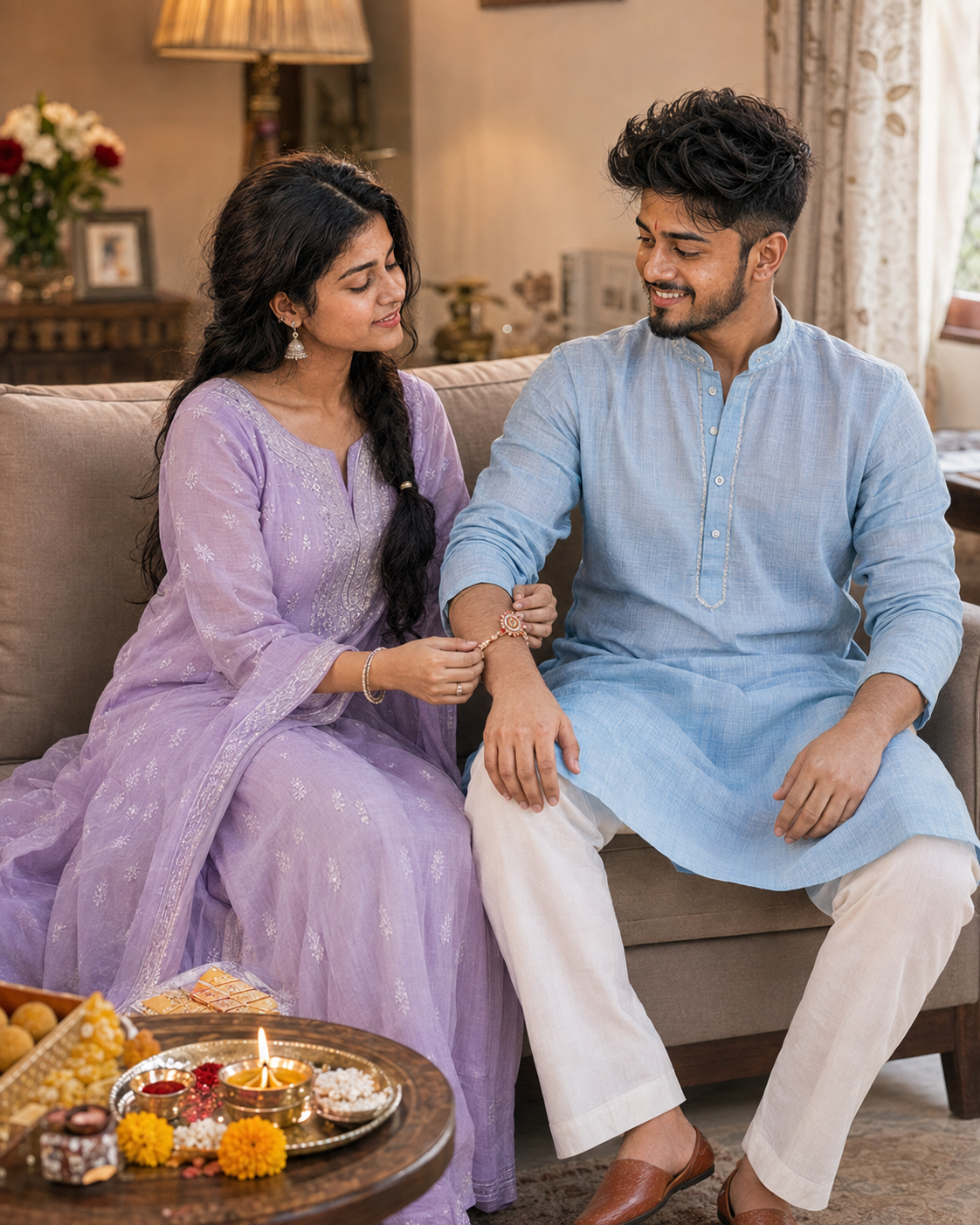
Brother Sister Sitting Together After Rakhi Ceremony At Home
I tested this seated composition and found that the closer sibling interaction helped preserve both faces across the runs I made. One small surprise was that a simple living-room background looked more convincing than a heavily decorated setup.
The Prompt
FACE MATCHING INSTRUCTIONS Use the uploaded reference images as the strict identity source for both siblings and preserve their exact face structure, eye shape, eyebrow shape, nose, lips, jawline, ears, skin tone, natural proportions, and facial asymmetry. Keep their identities unchanged and recognizable. Do not beautify, smooth, reshape, or redesign either face. FACE CLARITY Show visible pores, fine hairs, authentic skin texture, natural complexion variation, and realistic facial detail. Do not apply beauty filters, skin blurring, artificial sharpening, or porcelain skin effects. SCENE Set the portrait in a comfortable Indian family living room in Pune during early evening after the Raksha Bandhan ceremony. Include a small side table with a rakhi thali, leftover mithai, kumkum, rice grains, and a few fresh marigold flowers. SUBJECT Show an adult Indian brother and adult Indian sister sitting together after the ceremony. The sister should have a content, affectionate expression while looking at her brother, while the brother looks back with a relaxed smile. FACE AND LOOK DETAILS Keep the original hair length, hairline, density, and natural texture from the uploaded photos. Use minimal traditional makeup for the sister with natural lips and subtle kajal, and keep the brother's hairstyle and facial hair consistent with his reference photo. POSE DETAILS Have both siblings sit comfortably on a fabric sofa with their bodies angled slightly toward one another. The sister should hold the brother's wrist lightly to show the freshly tied rakhi while her other hand rests naturally on her lap, and the brother should rest one arm along the sofa and keep the other relaxed near his knee. Keep their gaze toward each other, not directly at the camera. OUTFIT DETAILS Dress the sister in a lavender cotton-silk Anarkali with subtle silver embroidery, small pearl jhumkas, thin bangles, and simple flat sandals. Dress the brother in a light-blue cotton kurta with white pajama trousers and brown mojri. Keep the clothing comfortable, festive, and realistically creased. BACKGROUND DETAILS Keep the sofa, siblings, rakhi, and nearby side table reasonably sharp while the deeper living-room furniture and decorative elements become softly out of focus. Use restrained festival decoration rather than filling the room with props. LIGHTING Use soft early-evening window light from the right side mixed with gentle warm household lighting. Create soft shadows under the chin and around the clothing folds while keeping both faces evenly exposed and naturally textured. CAMERA Use a waist-up seated portrait with a 50mm lens feel, eye-level perspective, moderate depth of field, and enough environmental context to show the family home without distracting from the siblings. COLOUR GRADE Use lavender, light blue, warm beige, white, muted gold, and natural wood tones with a soft warm evening finish and accurate skin colours. OUTPUT Generate a vertical 4:5 high-resolution portrait with realistic skin texture, detailed clothing, natural expressions, and photographic depth. AVOID Avoid extra fingers, duplicated hands, distorted wrists, floating objects, warped jewellery, unnatural sofa anatomy, plastic skin, excessive smoothing, face redesign, mismatched identities, text artefacts, logos, watermarks, and overly cinematic colour effects.
✦ Curated by MFDA
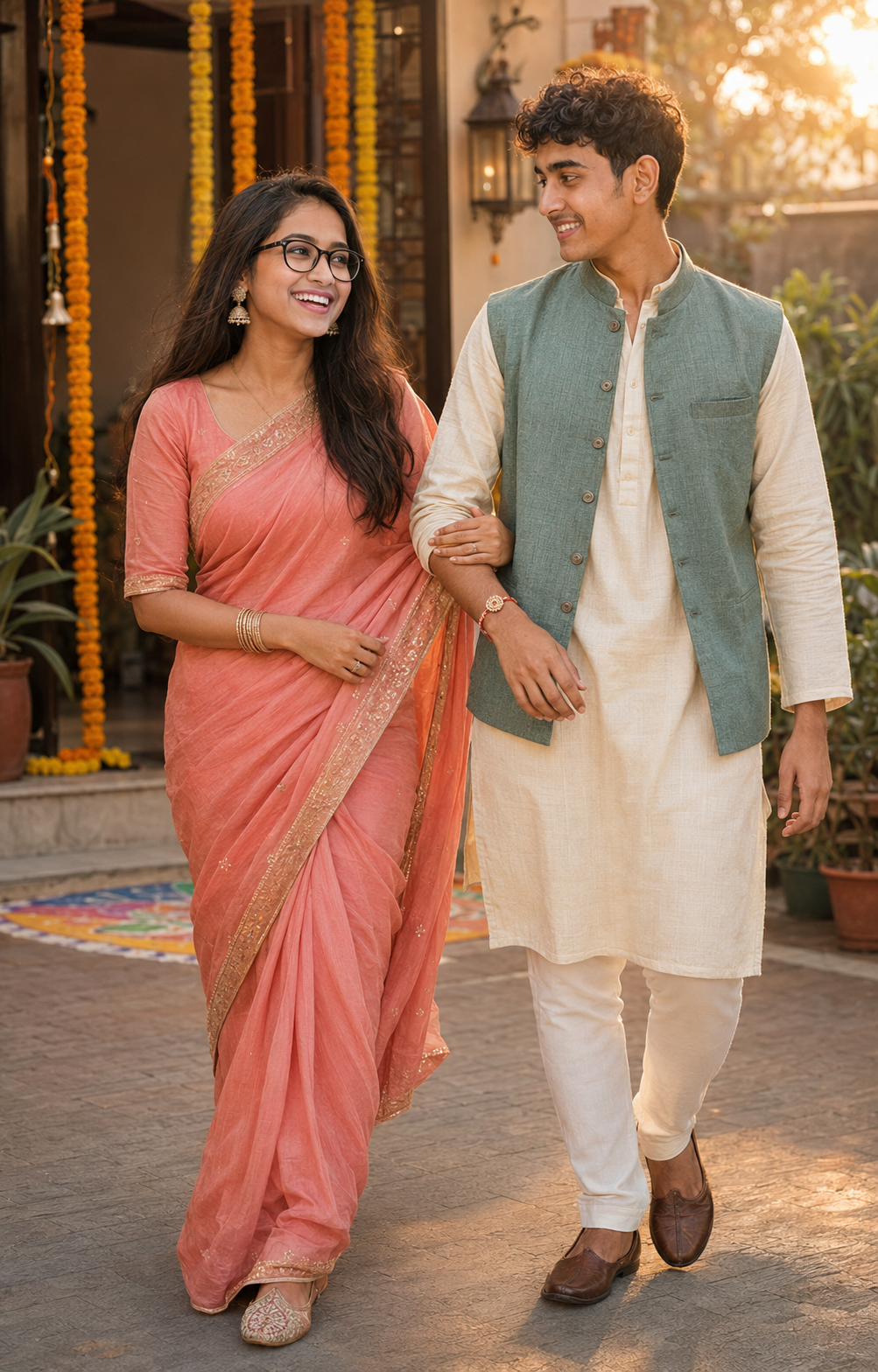
Emotional Raksha Bandhan Portrait With Brother Sister Walking Together
I ran this walking version with different framing and found that a mid-stride pose looked more natural than asking both siblings to stop and pose. I needed a few tries before the hand placement around the rakhi looked believable, but the final framing kept both faces clear.
The Prompt
FACE MATCHING INSTRUCTIONS Use the uploaded reference photos as the exact identity source for both siblings and preserve their face shape, eyes, eyebrows, nose, lips, jawline, ears, skin tone, natural facial proportions, and individual asymmetry. Keep both identities unchanged and immediately recognizable. Do not beautify, smooth, reshape, or redesign either face. FACE CLARITY Preserve visible pores, fine facial hairs, realistic skin texture, subtle complexion variation, and natural facial details. Do not use a beauty filter, artificial smoothing, waxy skin, or excessive facial retouching. SCENE Place the siblings walking slowly through a decorated residential courtyard in Delhi during golden hour on Raksha Bandhan. Include marigold garlands, a few potted plants, subtle festive rangoli near the entrance, and a small traditional lantern in the background. SUBJECT Show an adult Indian sister and adult Indian brother walking together immediately after a Raksha Bandhan celebration. The sister should have a gentle happy expression and glance toward her brother, while the brother looks back at her with a relaxed smile. FACE AND LOOK DETAILS Preserve each person's natural hairstyle, hairline, hair density, and grooming from the uploaded references. Give the sister minimal festive makeup with natural lips and subtle kajal, while keeping the brother's face naturally groomed and retaining any reference-consistent facial hair. POSE DETAILS Have the siblings walk side by side at a relaxed pace, with the sister gently holding the brother's forearm near the wrist where the rakhi is visible. Let the brother's opposite hand hang naturally while the sister's free hand moves naturally with her stride. Keep their shoulders relaxed, feet in believable walking positions, and expressions candid rather than posed. OUTFIT DETAILS Dress the sister in a coral-pink georgette saree with a delicate gold border, small gold jhumkas, thin bangles, and embroidered mojri. Dress the brother in a cream linen kurta with a muted teal sleeveless Nehru jacket and brown mojri. Show realistic fabric movement as they walk. BACKGROUND DETAILS Keep the siblings and their faces sharply defined while the courtyard entrance, rangoli, plants, and distant marigold decorations fall into a gentle background blur. Maintain enough environmental detail to communicate an Indian festive home. LIGHTING Use warm golden-hour sunlight coming from behind and slightly to the side, creating a soft natural edge light around the hair and clothing while keeping the faces illuminated by gentle reflected light. Avoid blown highlights and harsh shadows. CAMERA Use a full-body vertical composition with a 50mm lens feel, camera positioned around chest height, natural perspective, moderate depth of field, and realistic motion in the clothing without artificial motion blur on the faces. COLOUR GRADE Use coral pink, cream, muted teal, warm gold, terracotta, leafy green, and natural skin tones with a soft golden-hour finish. OUTPUT Generate a vertical 4:5 high-resolution portrait with sharp facial identity, realistic walking posture, detailed clothing, natural skin texture, and photographic depth. AVOID Avoid extra fingers, duplicated limbs, warped feet, broken hands, distorted rakhi threads, malformed jewellery, floating clothing, plastic skin, face changes, excessive smoothing, unrealistic motion blur, text artefacts, logos, watermarks, and exaggerated sunset effects.
✦ Curated by MFDA
PRO TIPS
Start with a clear front-facing reference photo where both eyes, eyebrows, nose, lips, and jawline are visible; I got less useful identity matching when the source face was heavily shadowed or partly covered by hair.
Keep these prompts at 4:5 for Instagram-style portraits; when I wanted a wider family scene, I changed only OUTPUT first instead of rewriting the entire prompt.
If the face drifts, I first strengthened FACE MATCHING INSTRUCTIONS and re-uploaded the clearest original photo rather than changing the outfit or background.
When I found a look I liked, I kept the same prompt and reference image and changed only one scene detail per re-run, which made it easier to return to the earlier look.
I once added too many decorative festival objects at the same time, and the scene became distracting, so I now keep the rakhi thali, marigold flowers, and one or two background details instead of filling every area.
FAQ
Q: Are these Raksha Bandhan Gemini prompts free to use?
Yes, the prompts themselves are free to copy and use. I wrote them so I could paste them into Google Gemini with an uploaded reference photo. Whether image generation is available without charge can depend on Google's current Gemini features, account limits, and the specific plan being used.
Q: Can I use these prompts in ChatGPT too?
Yes, I can use the same prompts in ChatGPT image generation with an uploaded reference photo. I may need to make small wording adjustments depending on the image model, but the face-matching, Indian outfit, pose, lighting, and scene instructions can remain largely the same.
Q: Why does Gemini change the face in my Raksha Bandhan photo?
The face can change when the reference image is unclear, the face is partly hidden, or the prompt gives too much freedom to redesign appearance. I found that explicitly repeating the original face structure, natural asymmetry, skin tone, and instruction not to beautify or redesign the face helped keep the identity closer.
Q: Can I post these Raksha Bandhan AI portraits on Instagram?
Yes, I can use these portraits for Instagram posts, Stories, or Reels covers, provided the generated image and its use follow Instagram's current rules. I would also avoid presenting an AI-generated person as a real event or person if that could mislead viewers.
Q: Do I need a paid Gemini plan for these prompts?
No, I do not need a paid plan just to copy or use the prompts. Access to particular Gemini image-generation features can vary by account, country, product version, and plan, so I would check the options available in my own Gemini account before starting.
Q: How do I make brother sister AI photos look more natural?
I would use a clear reference photo, keep the face instructions strict, and choose a simple interaction such as tying the rakhi or sitting together. I would also avoid exaggerated smiles and complicated hand poses because hands and facial expressions are common places where generated portraits can look unnatural.
About the Author
Jitesh Mali
Author