5 Best AI Photo Prompts for ChatGPT 2026

If you want AI edits that still look like your own photo, these six scenes give you more variety than another basic studio portrait. The set moves from a rainy blue-hour window to an old bedroom, a sandstone palace, a retro scooter street, four changing seasons, and an alternate-life mirror. In testing this kind of edit, the source photo matters more than people expect: a clear face with visible hairline and even lighting usually holds identity better. These ideas suit portraits, social posts, profile images, and creative blog projects. The prompts are designed around changing the environment, clothes, light, and mood while keeping the person recognizable.
Before you start
Use a sharp photo where your face isn't hidden by sunglasses, heavy shadows, or another person. A chest-up or half-body image works well for most of these scenes, while the palace and scooter concepts benefit from a visible full-body reference. ChatGPT can handle the transformations, but complex poses and hands may need a second correction.
Best source: clear portrait or full-body photo
Tool: ChatGPT with image upload
Recommended ratio: 4:5 vertical
Keep: face, hairline, skin tone, body proportions
Avoid: heavily filtered selfies and blurry faces
Rainy Window Reflection Portrait
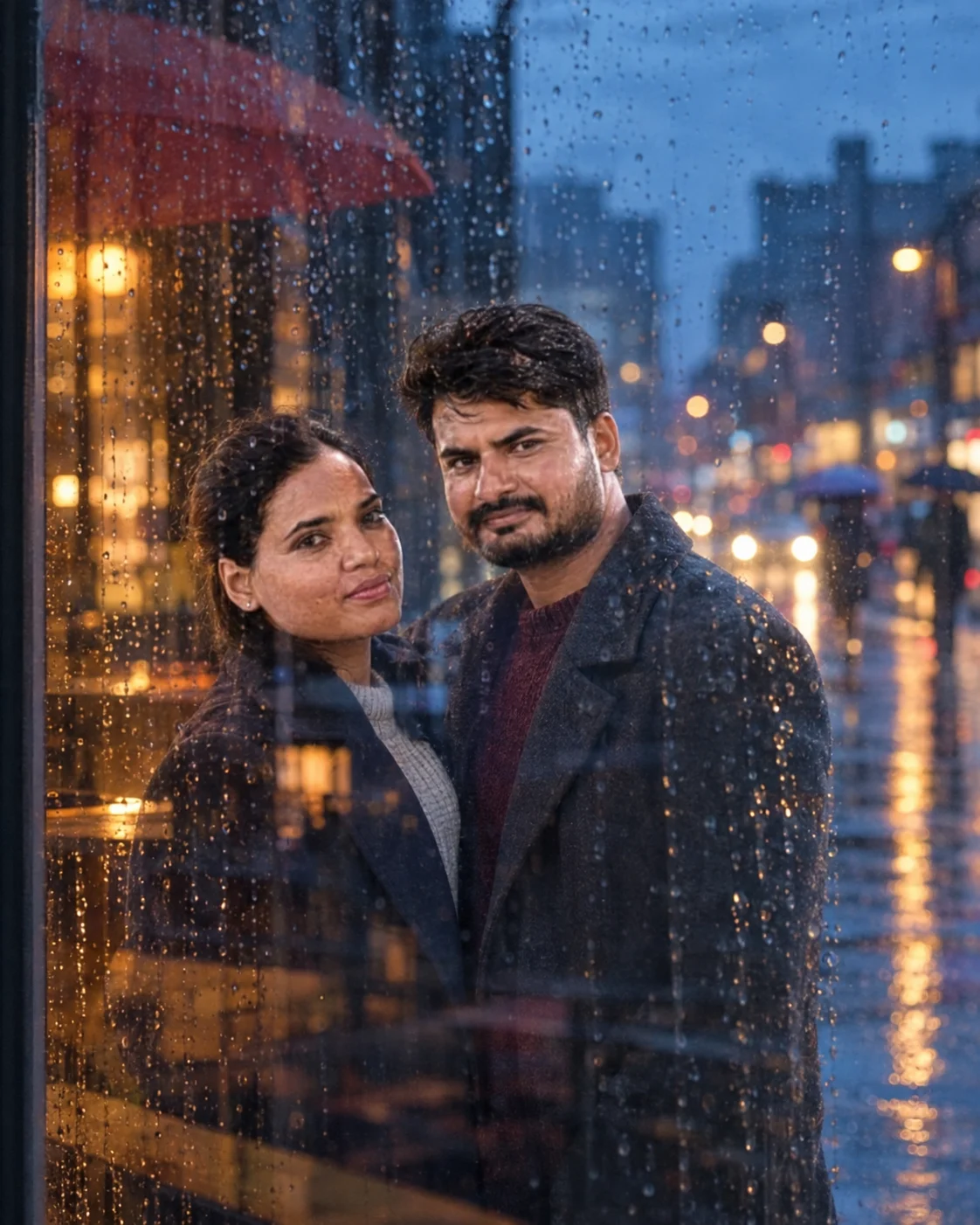
This is the quietest look in the set. Your photo becomes a cinematic blue-hour portrait viewed through rain-covered glass, with umbrella reflections and soft city light behind you. It works especially well for portraits with a calm expression. The important detail is the wet glass: droplets should sit between the camera and subject rather than appearing as random white marks on the face.
The Prompt
Using the uploaded photo, create a photorealistic cinematic rainy-window portrait of the same person, viewed through rain-covered glass during blue hour. KEEP - Preserve the uploaded person’s exact facial identity and proportions. Keep the forehead shape, eyebrow structure, eye shape and natural eye colour, nose structure, lip proportions, cheek shape, jawline, chin, facial proportions, and natural facial asymmetry unchanged. Preserve the original skin tone, visible pores, fine texture, freckles, marks, and natural complexion. Keep the exact hairline, hair density, hairstyle pattern, and facial hair if present. Preserve natural body proportions, shoulder width, neck length, torso shape, arm length, hand structure, and overall build. Keep the person clearly recognizable as the same individual. CHANGE - Place the person beside a rain-covered window, wearing a [coat colour] lightweight coat over a [top colour] knit top. Add a [umbrella colour] umbrella outside the glass, visible mainly through its soft reflection. Change the background into a quiet city street with wet pavement, distant headlights, storefront glow, and blurred evening movement. SCENE - Set the portrait during blue hour just after sunset. Position the subject close behind the glass while realistic rain droplets remain in the foreground. Keep large droplets sharply visible near the window surface, with smaller droplets scattered across the frame. Let distant buildings, vehicles, and pedestrians dissolve into soft optical blur. LIGHT - Use cool blue ambient light from the front-right, mixed with warm amber streetlights from behind and slightly to the left. Allow soft reflections across the wet glass without placing bright highlights directly over the eyes, nose, or lips. CAMERA - Use an 85mm lens at f/1.8, camera at eye height, with shallow depth of field. Keep the face sharply readable while the background and some foreground droplets fall gradually out of focus. GRADE - Use cool blue-gray shadows, restrained amber highlights, natural skin tones, moderate contrast, slightly lifted blacks, subtle fine film grain, and a muted cinematic night grade. OUTPUT - Create a vertical 4:5 composition at 1200 × 1500 pixels, keeping the face, shoulders, window droplets, and reflected umbrella visible. DO-NOT - No face slimming, no skin whitening, no changed eye colour, no plastic smoothing, no invented jewellery or tattoos, no facial reshaping, no extra fingers, no duplicated limbs, no rain marks painted directly onto the face, and no pasted-looking reflections.
✦ Curated by MFDA
Handwritten Diary Memory Scene
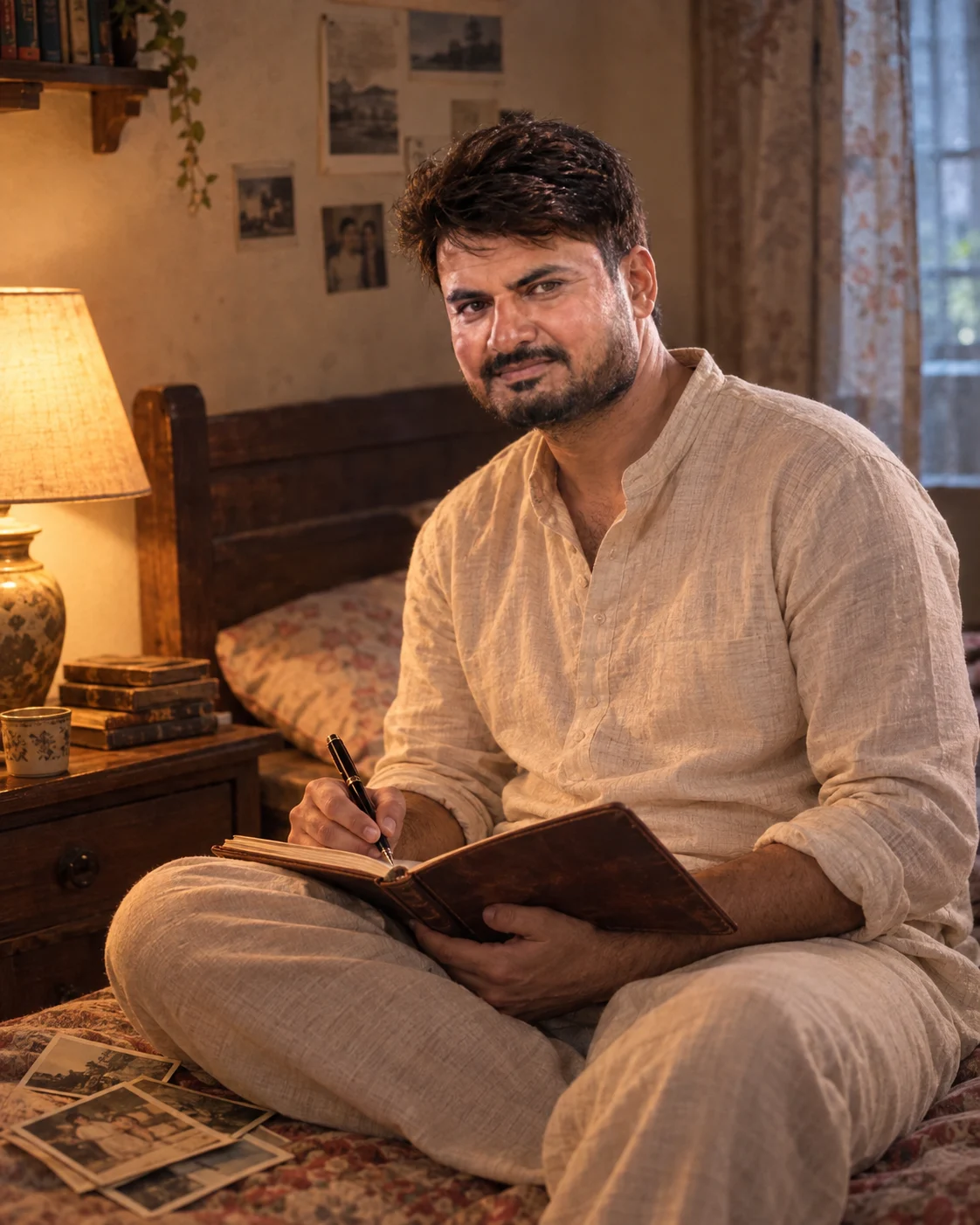
For a more nostalgic result, place yourself in an older bedroom with a diary open in your hands and faded photographs nearby. Warm lamp light gives the scene a personal, lived-in quality without needing a complicated location. A cotton or linen outfit works particularly well here because the softer fabric texture fits the intimate setting.
The Prompt
Using the uploaded photo, create a photorealistic nostalgic diary portrait of the same person sitting naturally in an older lived-in bedroom, writing a personal entry in a handwritten diary. KEEP - Preserve the uploaded person’s exact facial identity and proportions. Keep the forehead shape, eyebrow structure, eye shape and natural eye colour, nose structure, lip proportions, cheek shape, jawline, chin, facial proportions, and natural facial asymmetry unchanged. Preserve the original skin tone, visible pores, fine texture, freckles, marks, and natural complexion. Keep the exact hairline, hair density, hairstyle pattern, and facial hair if present. Preserve natural body proportions, shoulder width, neck length, torso shape, arm length, hand structure, and overall build. Keep the person recognizable as the same individual rather than turning them into a generic nostalgic character. CHANGE - Dress the person in a [cream cotton] or [beige linen] outfit with visible weave, soft creases, and natural fabric weight. Place a worn [brown leather] diary open across their lap, with one hand holding the pages and the other holding a [black ink] fountain pen. Add a simple [wooden] bedside table, an aged ceramic lamp, and a small stack of old photographs. SCENE - Set the portrait inside an older bedroom with faded cream walls, a wooden bed frame, slightly worn furniture, and a softly textured curtain. Place several faded photographs beside the diary rather than floating them around the subject. Keep the room recognizable but allow the background to soften naturally. LIGHT - Use one warm tungsten-style table lamp positioned on the subject’s left side, roughly 30–45 degrees from the face. Add weak cool ambient light from a nearby window so the shadow side does not become completely black. Keep the lamp glow strongest on the hands, diary, cheek, and nearby fabric. CAMERA - Use a 50mm lens at f/2.0, camera positioned slightly above seated eye level. Keep the face and diary sharp while letting the bed, wall, and distant furniture gradually blur. GRADE - Use warm amber highlights, muted cream, faded brown, dusty rose, gentle contrast, slightly lifted blacks, and fine analog-style grain. Keep skin tones neutral beneath the warm room lighting. OUTPUT - Create a vertical 4:5 composition at 1200 × 1500 pixels, showing the face, hands, open diary, upper body, and surrounding bedroom context. DO-NOT - No face slimming, no skin whitening, no changed eye colour, no plastic smoothing, no invented jewellery or tattoos, no facial reshaping, no extra fingers, no distorted hands, no duplicated limbs, and no floating photographs.
✦ Curated by MFDA
Royal Palace Courtyard Portrait
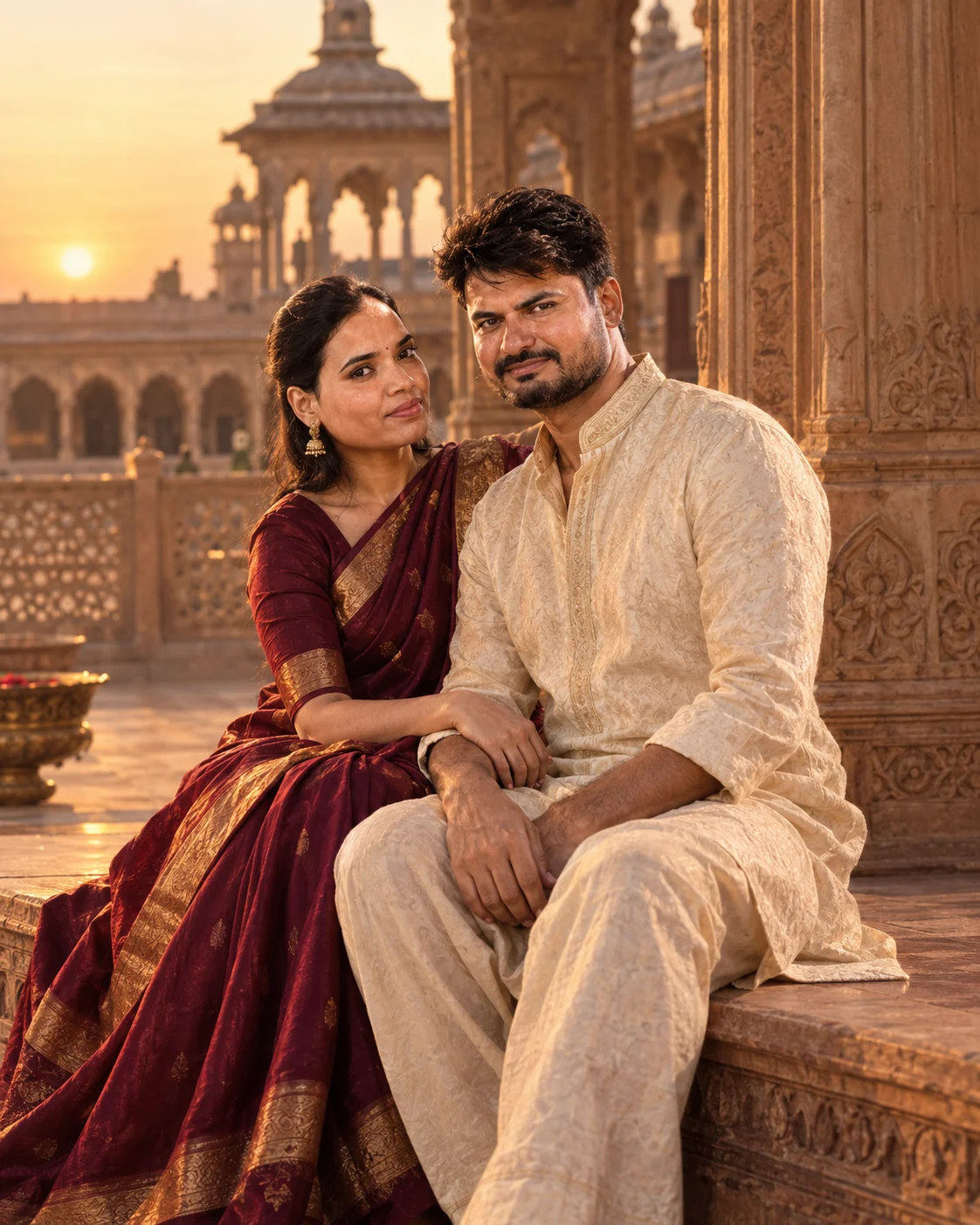
This version shifts the mood completely. You become the subject of a formal Indian portrait surrounded by sandstone architecture, carved details, and warm sunset light. A silk saree or kurta gives the image enough texture to read as ceremonial without covering the face. Keep the background slightly softer so the architectural detail supports rather than competes with the portrait.
The Prompt
Using the uploaded photo, create a photorealistic regal Indian portrait of the same person seated naturally in a historic sandstone palace courtyard at sunset. KEEP - Preserve the uploaded person’s exact facial identity and proportions. Keep the forehead shape, eyebrow structure, eye shape and natural eye colour, nose structure, lip proportions, cheek shape, jawline, chin, facial proportions, and natural facial asymmetry unchanged. Preserve the original skin tone, visible pores, fine texture, freckles, marks, and natural complexion. Keep the exact hairline, hair density, hairstyle pattern, and facial hair if present. Preserve natural body proportions, shoulder width, neck length, torso shape, arm length, hand structure, leg proportions, and overall build. Keep the person recognizable as the same individual throughout the transformation. CHANGE - Dress the person in a [deep maroon silk saree] with a visible woven sheen, structured pleats, and a [muted gold] border, or use a [cream silk kurta] with subtle [gold thread] detailing. Add only [simple traditional earrings] if desired. Seat the person on a low carved sandstone platform with a relaxed upright posture and hands positioned naturally. SCENE - Place the subject inside a grand Indian palace courtyard with warm sandstone walls, carved arches, jali screens, stone columns, and detailed ornamental surfaces. Position the architectural details behind and around the subject, keeping the nearest stonework recognizable while distant arches and courtyard elements soften into optical blur. LIGHT - Use low golden-hour sunlight entering from the front-left at approximately 25 degrees above the horizon. Let warm light reach the forehead, cheekbone, nose, hands, silk folds, and stone surfaces. Add soft reflected sunlight from the sandstone floor to gently fill the shadow side of the face. CAMERA - Use an 85mm lens at f/2.8, camera at seated chest height, with natural portrait compression and controlled background separation. Keep the eyes and facial texture sharply resolved. GRADE - Use warm sandstone, muted maroon, antique gold, and natural skin tones. Apply moderate contrast, restrained saturation, slightly softened highlights, deep but detailed shadows, and subtle fine film grain. OUTPUT - Create a vertical 4:5 composition at 1200 × 1500 pixels, keeping the full seated pose, clothing drape, hands, and surrounding palace architecture visible. DO-NOT - No face slimming, no skin whitening, no changed eye colour, no plastic smoothing, no facial reshaping, no invented jewellery or tattoos, no extra fingers, no distorted hands, no duplicated limbs, and no modern architecture.
✦ Curated by MFDA
Vintage Scooter Street Portrait
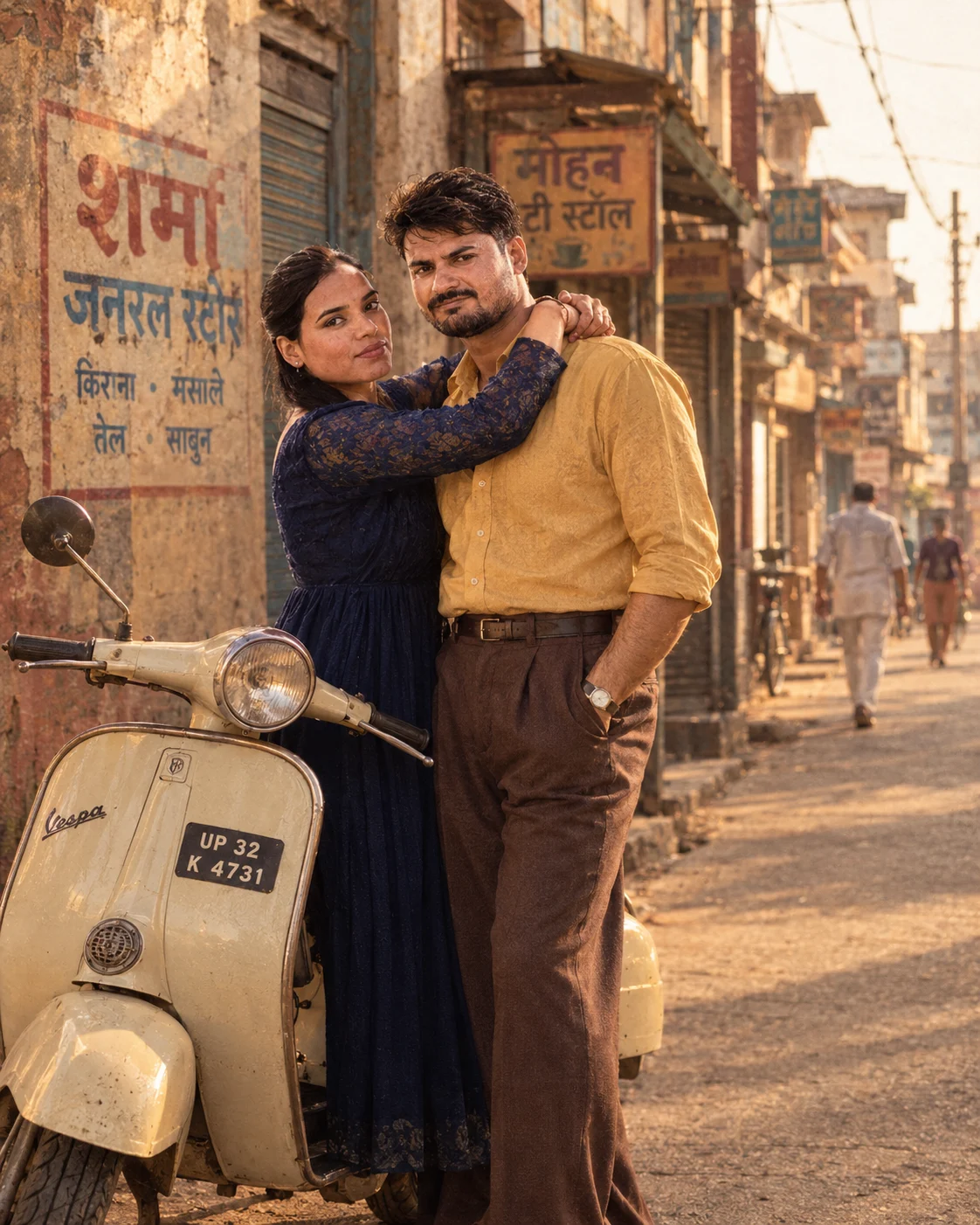
A classic scooter changes the composition because it gives you something physical to lean against or stand beside. Set the scene on a quieter old street with faded shop fronts and warm 1980s-style film tones. The strongest results come when the scooter looks genuinely period-appropriate; a modern vehicle immediately breaks the visual story.
The Prompt
Using the uploaded photo, create a photorealistic vintage Indian street portrait of the same person standing naturally beside a classic period-appropriate Indian scooter on a quiet old city street. KEEP - Preserve the uploaded person’s exact facial identity and proportions. Keep the forehead shape, eyebrow structure, eye shape and natural eye colour, nose structure, lip proportions, cheek shape, jawline, chin, facial proportions, and natural facial asymmetry unchanged. Preserve the original skin tone, visible pores, fine texture, freckles, marks, and natural complexion. Keep the exact hairline, hair density, hairstyle pattern, and facial hair if present. Preserve natural body proportions, shoulder width, neck length, torso shape, arm length, hand structure, leg proportions, and overall build. Keep the person recognizable as the same individual rather than turning them into a generic retro-film character. CHANGE - Dress the person in a [mustard cotton] shirt or [muted cream linen] top with [dark brown] high-waisted trousers or a period-appropriate [deep maroon] skirt. Use realistic woven fabric, natural creases, and slightly softened vintage styling. Place a genuine-looking [cream vintage scooter] beside the subject, with one hand resting naturally on the handlebar or seat and the other relaxed by the side. SCENE - Set the portrait on a quiet older Indian street during the late afternoon. Add faded painted shopfronts, weathered plaster walls, old shutters, period-style signboards, overhead electrical wires, and a few distant pedestrians. Keep the scooter close to the subject and sharply recognizable. Let the street background become moderately soft without losing its retro character. LIGHT - Use warm late-afternoon sunlight from the front-left at roughly 30 degrees above eye level. Let sunlight create controlled highlights along the forehead, cheek, hair, clothing, scooter body, and hands. Add warm reflected light from nearby walls to fill the shadow side of the face naturally. CAMERA - Use a 50mm lens at f/2.8, camera positioned around waist-to-chest height. Keep the subject and scooter sharply defined while allowing distant storefronts to fall into natural optical softness. GRADE - Apply faded 1980s Indian film tones with dusty cream, muted mustard, brown, soft red, and amber colours. Use slightly lifted blacks, moderate contrast, restrained saturation, gentle highlight roll-off, and fine analog film grain. OUTPUT - Create a vertical 4:5 composition at 1200 × 1500 pixels, keeping the full person, scooter, hands, and enough street context visible. DO-NOT - No face slimming, no skin whitening, no changed eye colour, no plastic smoothing, no facial reshaping, no invented jewellery or tattoos, no extra fingers, no distorted hands, no duplicated limbs, no modern scooter design, and no glossy digital finish.
✦ Curated by MFDA
Four Seasons, One Person
This concept is useful when you want a single image to show different moods without losing your identity. Divide the frame into monsoon, winter, spring, and autumn versions, changing the clothes, weather, and surroundings while keeping your facial structure consistent. Matching character scale across all four sections prevents the result from looking like four unrelated people.
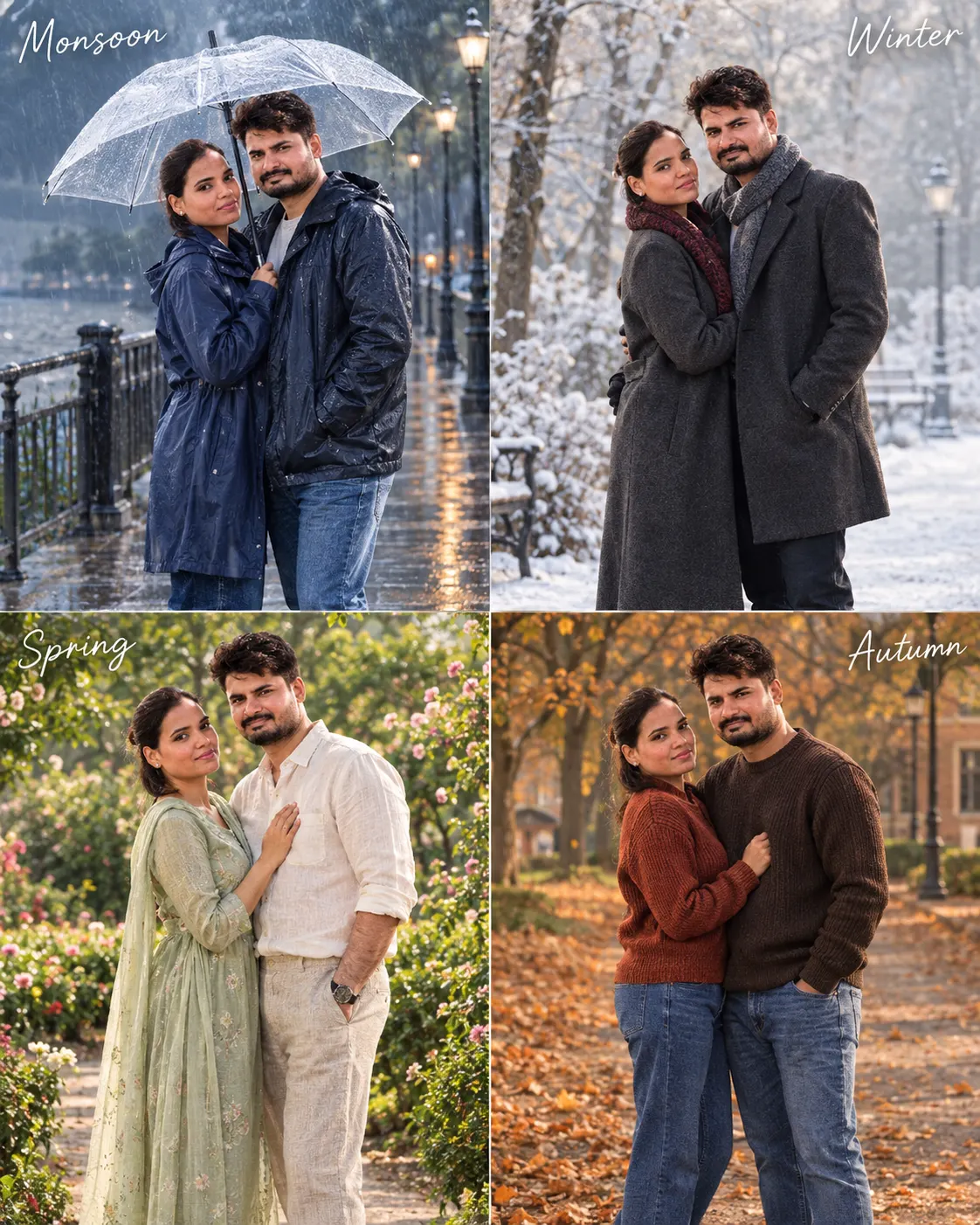
The Prompt
Using the uploaded photo, create a photorealistic four-panel portrait showing the same person across monsoon, winter, spring, and autumn. KEEP - Preserve the uploaded person’s exact facial identity in every panel. Keep the same forehead shape, eyebrow structure, eye shape and natural eye colour, nose structure, lip proportions, cheek shape, jawline, chin, facial proportions, and natural facial asymmetry. Preserve the original skin tone, visible pores, fine texture, freckles, marks, and natural complexion. Keep the exact hairline, hair density, hairstyle pattern, and facial hair if present. Maintain the person’s natural height impression, shoulder width, torso proportions, arm length, hand structure, leg proportions, and overall build consistently across all four seasonal versions. CHANGE - Divide the image into four connected sections. Dress the monsoon version in a [raincoat colour] lightweight waterproof jacket over a [top colour] cotton top, with damp surroundings and a transparent umbrella. Dress the winter version in a [coat colour] wool coat, knitted scarf, and dark trousers. Style the spring version in a [spring outfit colour] linen outfit surrounded by fresh greenery and small blossoms. Dress the autumn version in a [sweater colour] wool sweater with [denim colour] jeans among fallen leaves. Change only wardrobe, environment, weather, pose details, and seasonal colour treatment. SCENE - Place each version in a distinct but visually compatible outdoor setting. Use a rain-covered walkway for monsoon, a quiet frosty park for winter, a flowering garden for spring, and a tree-lined campus path for autumn. Keep distant backgrounds softly blurred while preserving enough seasonal detail to identify each panel. LIGHT - Use cool diffused daylight for monsoon, pale low winter sunlight for winter, clean morning daylight for spring, and warm late-afternoon sunlight for autumn. Keep facial illumination consistent with each environment. CAMERA - Use a 50mm lens look at f/4, camera at chest height, with matching character scale and natural perspective across all four panels. GRADE - Use cool blue-gray tones for monsoon, restrained neutral whites for winter, fresh green tones for spring, and muted amber-brown tones for autumn. Keep natural skin colour consistent. OUTPUT - Create a vertical 4:5 composition at 1200 × 1500 pixels, with all four full-body versions visible and evenly balanced. DO-NOT - No face slimming, no skin whitening, no changed eye colour, no plastic smoothing, no invented jewellery or tattoos, no facial reshaping, no identity mixing, no inconsistent body proportions, no extra fingers, no duplicated limbs, and no cropped feet.
✦ Curated by MFDA
How to use these in ChatGPT
Open ChatGPT and choose the image upload option.
Upload a sharp photo with your face clearly visible.
Paste one prompt card with the uploaded image.
Use a 4:5 vertical composition for portrait-focused results.
Check the face, hands, hairline, and lighting before accepting it.
If it looks wrong, ask ChatGPT to correct only that area.
Getting better results
Use a daylight source photo so skin texture survives the rainy blue-hour edit.
Keep the full hairline visible for the mirror scene so reflections stay aligned.
Choose a full-body reference for the scooter scene so the pose has room to work.
Use a simple outfit photo for the palace edit so the new silk fabric renders cleanly.
Avoid a cluttered background in the source because it can leak into the new scene.
For the four-season edit, use one straight-facing photo so each version stays consistent.
Keep facial expression neutral when possible because strong expressions can drift.
When the result comes out wrong
What went wrong | Why it happens | What to change |
|---|---|---|
Face looks like another person | The new scene has taken priority over identity | Ask it to restore the original facial structure |
Skin looks plastic | Texture has been smoothed during the style change | Request visible pores and natural skin texture |
Hands look wrong | Complex props and poses increase anatomy errors | Simplify the hand position and regenerate |
Lighting looks pasted on | Subject and background use different light directions | Match the face light to the scene's main source |
Mirror reflection looks unrelated | Reflection perspective or identity wasn't preserved | Request the same face, height, and pose relationship |
Scooter looks modern | Generic vehicle details replaced the period styling | Specify a classic period Indian scooter again |
FAQ
Does this work with any photo?
Not equally well. A sharp photo with the face clearly visible gives ChatGPT more useful identity information. Straight or lightly angled portraits usually work better than extreme side profiles. If you're creating a full-body palace or scooter scene, a reference showing your proportions also helps the generated pose stay believable.
Why does ChatGPT change my face?
The model has to rebuild the person while changing the entire scene, so identity can weaken when the requested styling is very different. Clear source photos help. You can also ask for the original forehead, eyes, nose, lips, jawline, skin texture, and hairline to remain unchanged.
Can I use these AI images commercially?
That depends on the image tool's current terms, your account or plan, and the content of the generated image. Before using an image in paid advertising, products, or client work, check the applicable ChatGPT terms and any rights attached to source images, logos, people, or other protected material.
Is ChatGPT free for these edits?
ChatGPT may offer image features on free access, but availability, limits, and generation allowances can change. If an image option isn't available on your account, check the current plan and feature limits shown in ChatGPT rather than assuming every account has the same access.
How do I get a different variation?
Keep the identity instructions unchanged and alter one visual element at a time. Try changing the time of day, wardrobe colour, camera angle, background, or film grade. Changing everything at once makes it harder to tell which instruction caused an unwanted result.
Can I use my own clothes in these edits?
Yes. If you want the generated image to retain your clothing, state that clearly instead of asking for a new wardrobe. For the palace and diary scenes, you can also change only the fabric or colour while keeping the original outfit structure.
Which prompt should I try first?
Start with the rainy window portrait if you have a clear head-and-shoulders photo. It doesn't require a complicated full-body pose, and the rain-covered glass gives the image a strong visual change without forcing the model to rebuild your entire body.
Closing
Start with the rainy window scene if identity accuracy is your priority. Once that works, try the diary or mirror concept for more storytelling. For full-body experiments, move to the palace and scooter edits, then save the four-season version for when you want a more complex composition.
About the Author
Naziya
Creative AI writer at MFDA, sharing trendy photo-editing prompts and fresh ideas for beautiful, stylish AI images.