4 Traditional Outfit Photo Prompts for Girls 2026
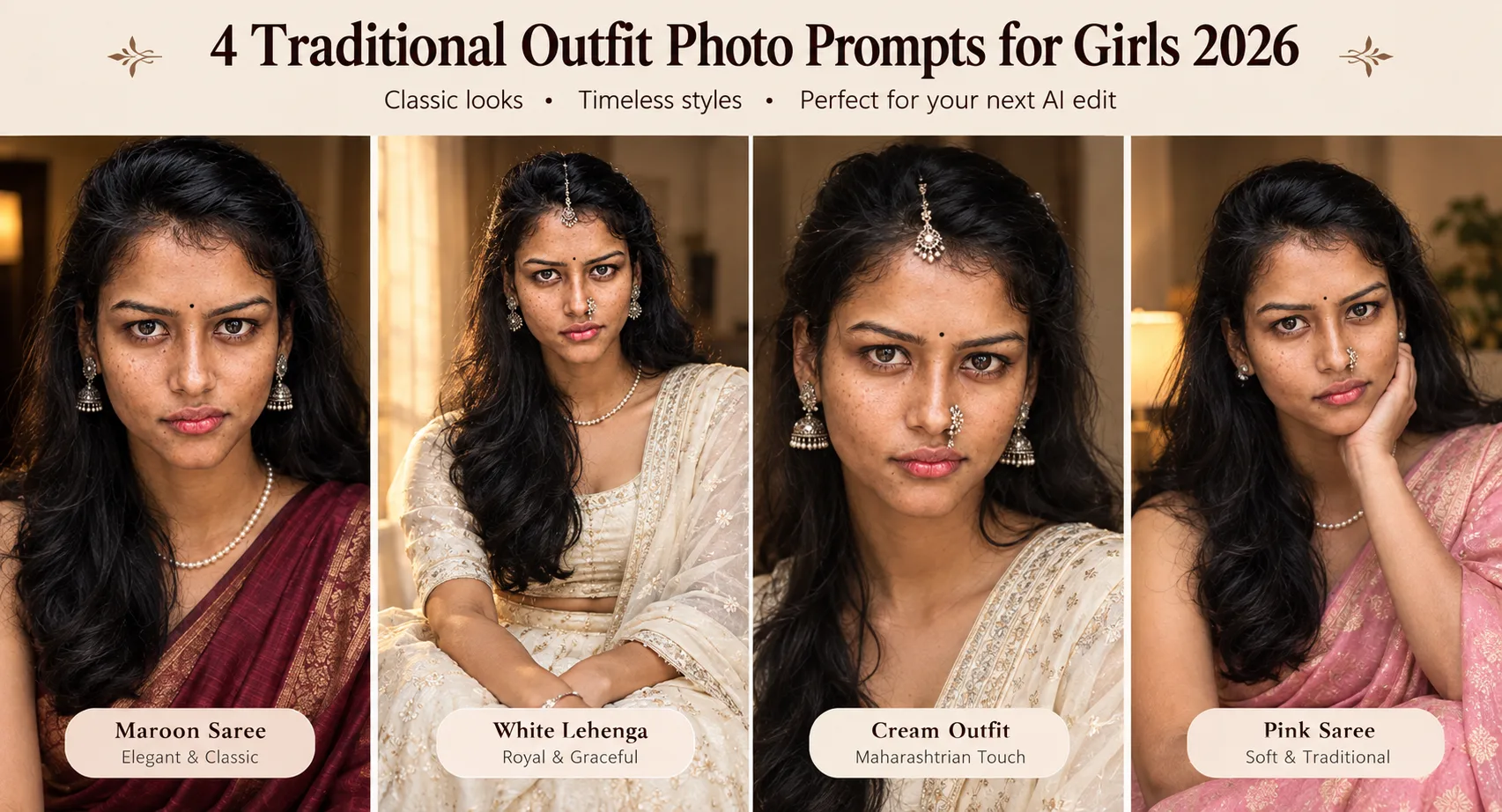
Traditional clothing works especially well in AI portraits because fabric, jewelry, hair, and light give the image clear visual structure. These traditional outfit photo prompts for girls focus on four different results rather than repeating the same saree portrait with minor changes. When testing this style, small details matter: a Banarasi saree needs visible woven texture and natural folds, while jewelry looks more convincing when the light has somewhere specific to reflect. You also get better identity retention when the uploaded photo is clear and the face isn't buried under heavy styling. The four looks below cover smartphone selfies, close-up ethnic beauty, a white lehenga editorial, and a softer cream traditional look.
Before you start
Start with a clear photo where your face is visible and reasonably well lit. A front-facing portrait works particularly well for the first two concepts, while a photo showing more of your upper body gives the clothing-focused looks more room. These prompts are written for ChatGPT image generation and keep the output photorealistic rather than illustrated.
Best starting photo: clear face, natural expression, minimal blur
Tool: ChatGPT image generation
Aspect ratios: 9:16 for the selfie collage; 4:5 for the editorial portraits
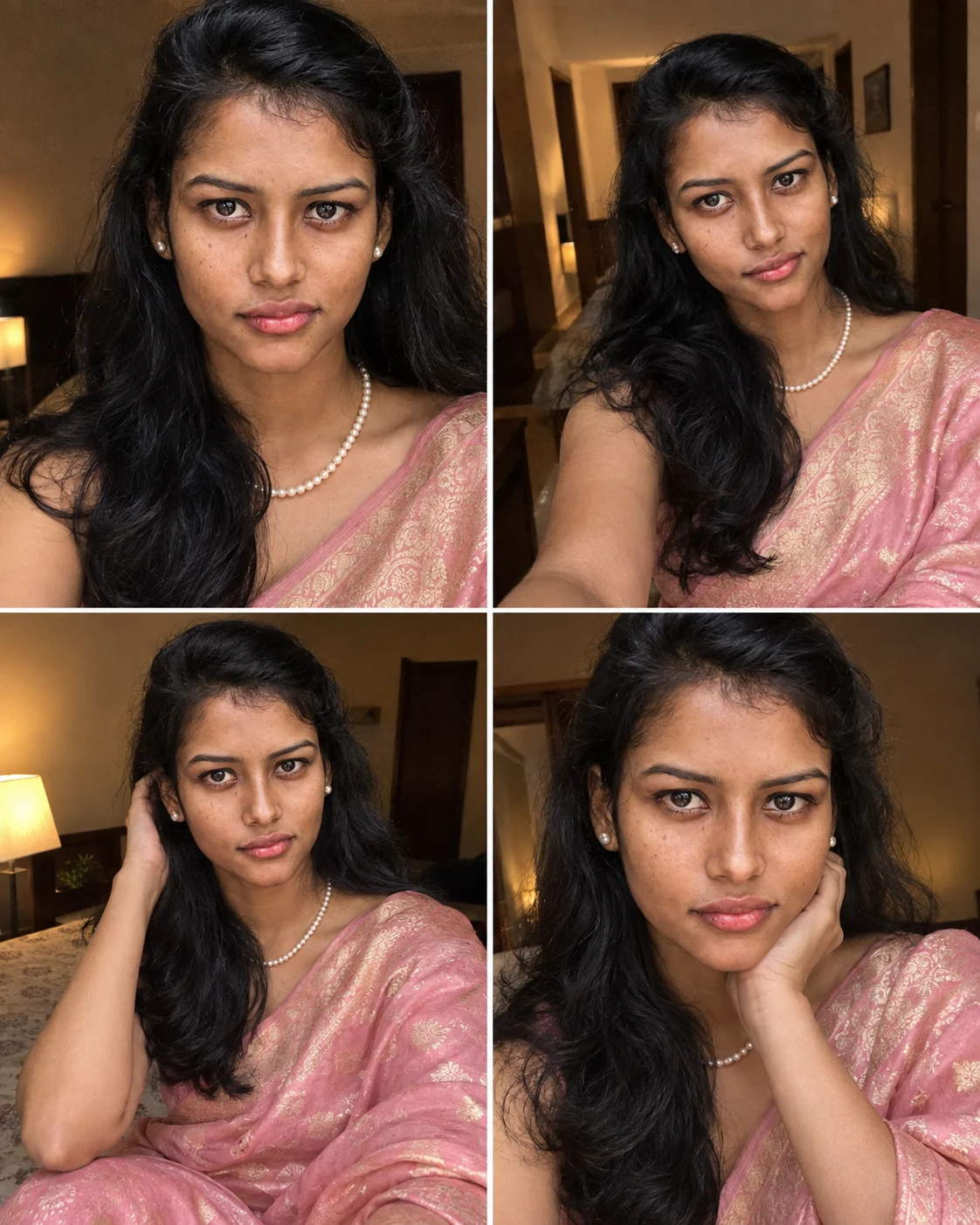
Pink Banarasi Saree Smartphone Collage
This look turns one reference photo into a four-frame indoor selfie collage. The main visual anchor is a blush-pink Banarasi silk saree with antique-gold detailing, supported by pearl jewelry and warm indoor light. The frames vary the camera distance and pose, so the finished image feels like a group of genuine phone captures rather than four copies of the same portrait.
The Prompt
Using the uploaded photo, create a photorealistic four-frame indoor smartphone selfie collage of the same person, styled as genuine personal phone captures rather than repeated studio portraits. KEEP - Preserve the exact facial structure from the uploaded photo, including forehead shape, eyebrow structure, eye shape, natural eye colour, nose proportions, lips, cheeks, jawline, chin, facial proportions, and natural asymmetry. Keep the original skin tone and visible skin texture, including pores, fine lines, freckles, and natural marks. Preserve the original hairline, hair density, hair texture, and recognizable hairstyle pattern. Keep any existing facial hair exactly as shown. Preserve the person's natural body proportions, shoulder width, neck, arms, hands, fingers, and overall build. Keep the person clearly recognizable in every frame. CHANGE - Dress the person in a blush-pink Banarasi silk saree with visible woven texture and subtle antique-gold detailing. Add refined pearl jewelry: small pearl earrings and a simple pearl necklace, with no other invented jewelry. Create four different smartphone selfie frames with varied crop, head angle, arm position, and camera distance. Keep the poses natural and relaxed. SCENE - Place the person indoors in a warm, softly lit home setting during the evening. Use a simple warm-toned interior behind them with realistic walls and subtle household depth. Keep the background softly blurred rather than heavily artificial. Make each frame feel like it was captured separately on a smartphone. LIGHT - Use warm indoor light coming mainly from the front-left, with softer ambient fill from the room. Keep the light gentle on the face, with natural shadow falloff under the chin and along the opposite cheek. Avoid harsh studio highlights. CAMERA - Simulate a modern smartphone camera using approximately 26mm equivalent at f/1.8. Keep the camera around eye to slightly above-eye height, with realistic phone perspective and mild background separation. Vary the framing between close-up, medium selfie, and slightly wider selfie crops. GRADE - Use warm neutral skin tones, soft contrast, natural highlights, and a subtle smartphone-camera colour treatment. Keep the pink saree rich but realistic and retain visible Banarasi fabric texture. OUTPUT - Create one cohesive four-frame collage in a 4:5 vertical aspect ratio at 2048 × 2560 pixels. Keep clean separation between frames while making all four images feel like authentic captures from the same evening. DO-NOT - No face slimming, no skin whitening, no changed eye colour, no plastic smoothing, no altered facial proportions, no face blending, no duplicated pose, no invented jewellery or tattoos, and no generic replacement face.
✦ Curated by MFDA
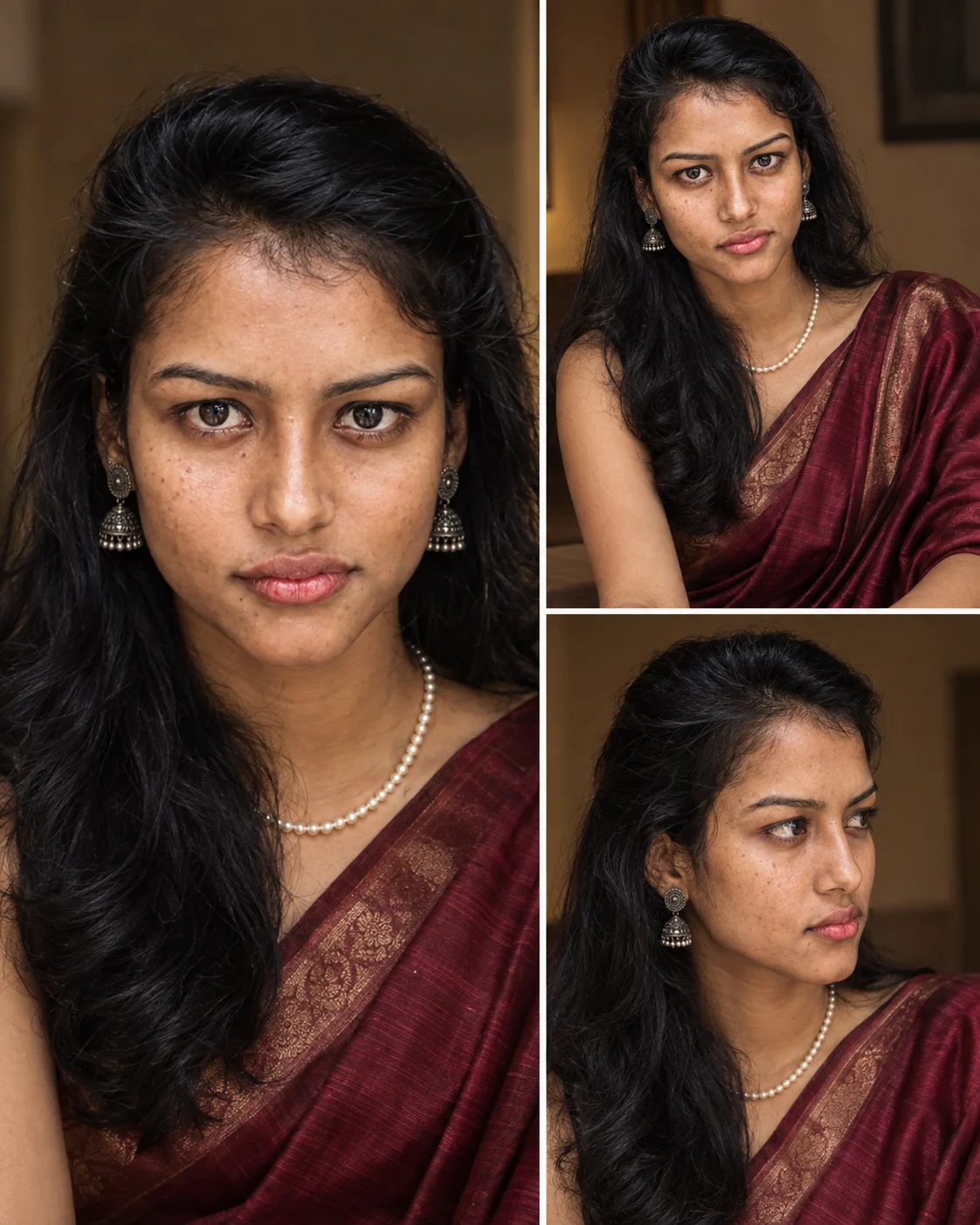
Maroon Saree Close-Up Beauty Edit
Use this version when you want richer color and a more traditional jewelry-focused result. The deep maroon silk gives the portrait stronger contrast against a neutral indoor background, while the oxidized and pearl-style accessories bring attention to the face and profile. The three views are useful for showing eye makeup, the full beauty portrait, and side-profile details without changing the person.
The Prompt
Using the uploaded photo, create a photorealistic three-view indoor beauty portrait of the same person, with each view showing the same recognizable identity from a different close-up angle. KEEP - Preserve the exact facial structure from the uploaded photo, including forehead shape, eyebrow structure, eye shape, natural eye colour, nose proportions, lips, cheeks, jawline, chin, facial proportions, and natural asymmetry. Keep the original skin tone and visible texture, including pores, fine lines, freckles, and natural marks. Preserve the original hairline, hair density, hair texture, and recognizable hairstyle pattern. Keep any existing facial hair unchanged. Preserve natural body proportions, neck width, shoulders, and visible arms. Keep the person's identity consistent across all three views. CHANGE - Dress the person in a deep maroon silk saree with a visible smooth woven sheen and traditional drape. Add restrained oxidized-metal earrings and a delicate pearl-style necklace, keeping the jewelry close to the neckline and ears. Create three related views: a straight-on beauty close-up, a slightly angled portrait showing more of the saree, and a gentle side-profile view. Use refined traditional styling without changing the person's facial features. SCENE - Place the person indoors against a neutral beige-to-brown interior background during the evening. Keep the background uncluttered and softly blurred, with enough tonal separation for the maroon silk to remain distinct from the surroundings. Avoid dramatic scenery or outdoor elements. LIGHT - Use a large warm light source from the front-left, with soft ambient fill from the room. Keep gentle highlights across the forehead, cheekbones, nose, and silk while allowing natural shadows along the opposite side of the face and jaw. Use approximately 3200–3800K warm indoor colour temperature. CAMERA - Simulate an 85mm portrait lens at f/2.0, positioned around eye height. Use close framing for the front view, slightly wider framing for the saree view, and a controlled three-quarter-to-side angle for the profile. Keep facial proportions natural without wide-angle distortion. GRADE - Use deep maroon, warm neutral skin tones, restrained saturation, soft contrast, and slightly warm highlights. Retain realistic skin texture and a subtle editorial portrait finish without excessive retouching. OUTPUT - Create a cohesive three-view vertical collage in a 4:5 aspect ratio at 2048 × 2560 pixels, with clean separation between views and consistent identity, wardrobe, lighting, and colour treatment. DO-NOT - No face slimming, no skin whitening, no changed eye colour, no plastic smoothing, no altered facial proportions, no face blending, no invented tattoos, no oversized jewelry, and no generic replacement face.
✦ Curated by MFDA
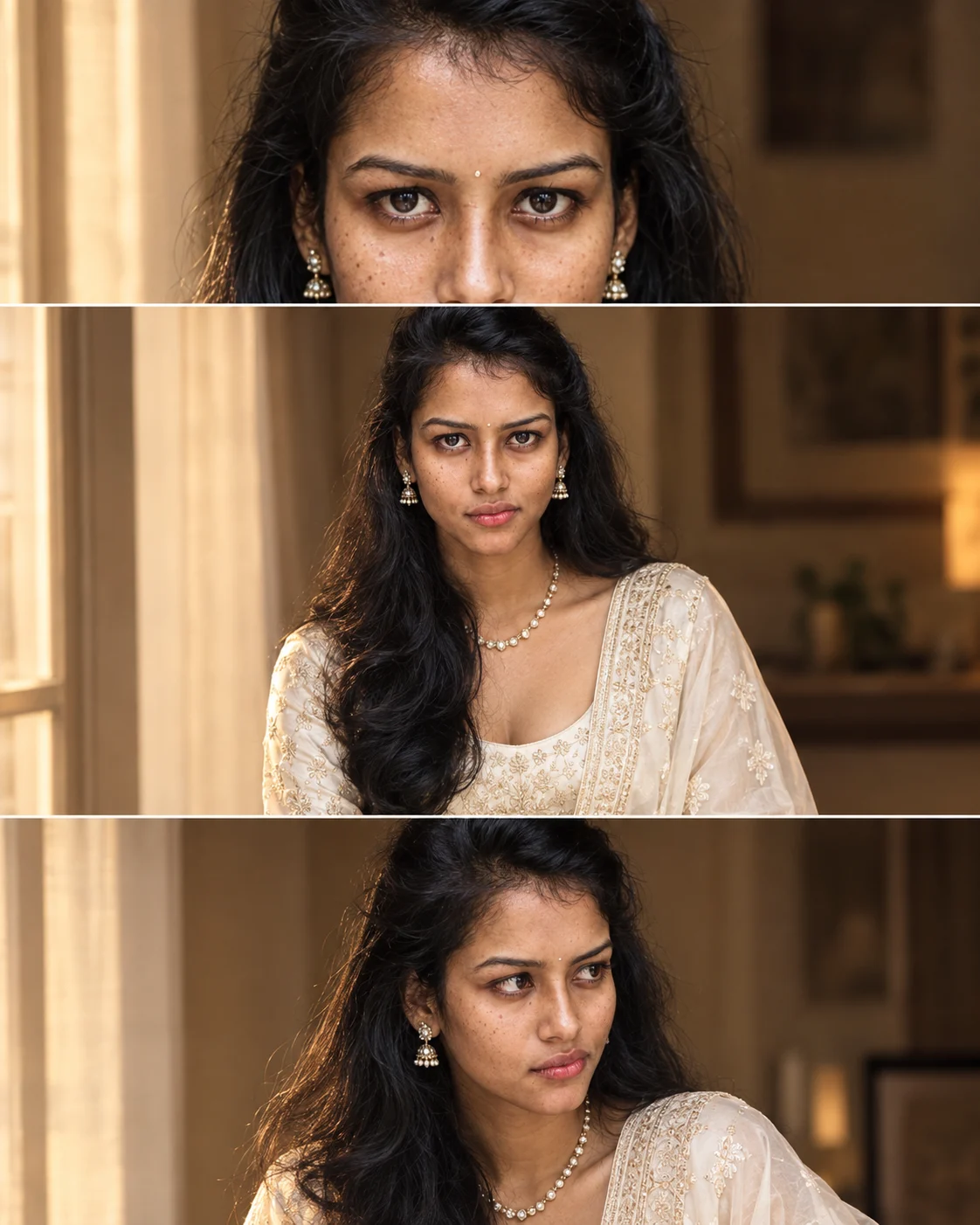
White Lehenga Golden-Hour Editorial
The white lehenga concept moves away from the smartphone look and into polished ethnic fashion photography. A warm side-lit window, beige surroundings, and a close 85mm-style portrait treatment create a softer editorial feel. The three-panel arrangement also gives the jewelry a clear role: the upper frame focuses on the eyes and forehead, the center on the portrait, and the lower frame on the profile.
The Prompt
Using the uploaded photo, create a photorealistic three-panel ethnic fashion editorial portrait of the same person, keeping the face recognizable in every panel. KEEP - Preserve the exact facial structure from the uploaded photo, including forehead shape, eyebrow structure, eye shape, natural eye colour, nose proportions, lips, cheeks, jawline, chin, facial proportions, and natural asymmetry. Keep the original skin tone and visible texture, including pores, fine lines, freckles, and natural marks. Preserve the original hairline, hair density, hair texture, and recognizable hairstyle pattern. Keep any existing facial hair exactly as shown. Preserve natural body proportions, shoulder width, neck, arms, hands, fingers, and overall build. Keep the person's identity consistent across all three panels. CHANGE - Dress the person in an elegant ivory-white lehenga with a structured blouse and flowing skirt, using opaque silk or satin fabric with fine embroidered detailing. Add refined traditional jewelry with small metallic earrings, a delicate necklace, and subtle forehead jewelry only where it suits the composition. Create three views: an upper close-up emphasizing the eyes and forehead, a central portrait showing the full ethnic styling, and a lower three-quarter profile emphasizing the face, jewelry, and lehenga texture. Keep the poses graceful and controlled. SCENE - Place the person beside a large indoor window during late afternoon golden hour. Use warm beige walls, softly visible curtains, and a restrained neutral interior behind them. Keep the background strongly blurred but recognizable as an elegant indoor setting. Let the window remain off to one side rather than directly behind the head. LIGHT - Use warm sunlight entering from the left side of the frame, creating soft directional highlights along the forehead, cheekbone, nose bridge, and white fabric. Add gentle ambient fill from the room so the shadow side of the face retains skin detail. Keep the light around 4200–4800K for warm golden-hour colour without turning the skin orange. CAMERA - Simulate an 85mm portrait lens at f/1.8, positioned around eye height. Use compressed facial perspective, shallow depth of field, and controlled focus on the eyes. Keep the central panel slightly wider while maintaining the same lens character across all three views. GRADE - Apply a warm editorial colour treatment with creamy whites, beige neutrals, restrained gold highlights, soft blacks, and moderate contrast. Keep skin tones natural and prevent the white lehenga from clipping into featureless white. OUTPUT - Create a cohesive three-panel vertical collage in a 4:5 aspect ratio at 2048 × 2560 pixels, with clean panel separation and consistent wardrobe, lighting, face, hair, and colour treatment. DO-NOT - No face slimming, no skin whitening, no changed eye colour, no plastic smoothing, no altered facial proportions, no face blending, no invented tattoos, no excessive jewelry, no blown-out white fabric, and no generic replacement face.
✦ Curated by MFDA
Cream Outfit With Silver Maharashtrian Details
This version keeps the palette quieter and lets the silver jewelry do more of the visual work. The cream traditional outfit pairs with a small black bindi, Maharashtrian-style nose jewelry, earrings, and maang tikka. Golden-hour window light adds warmth without turning the skin orange, while the three-frame layout gives you close-up, front-facing, and profile views in one image.
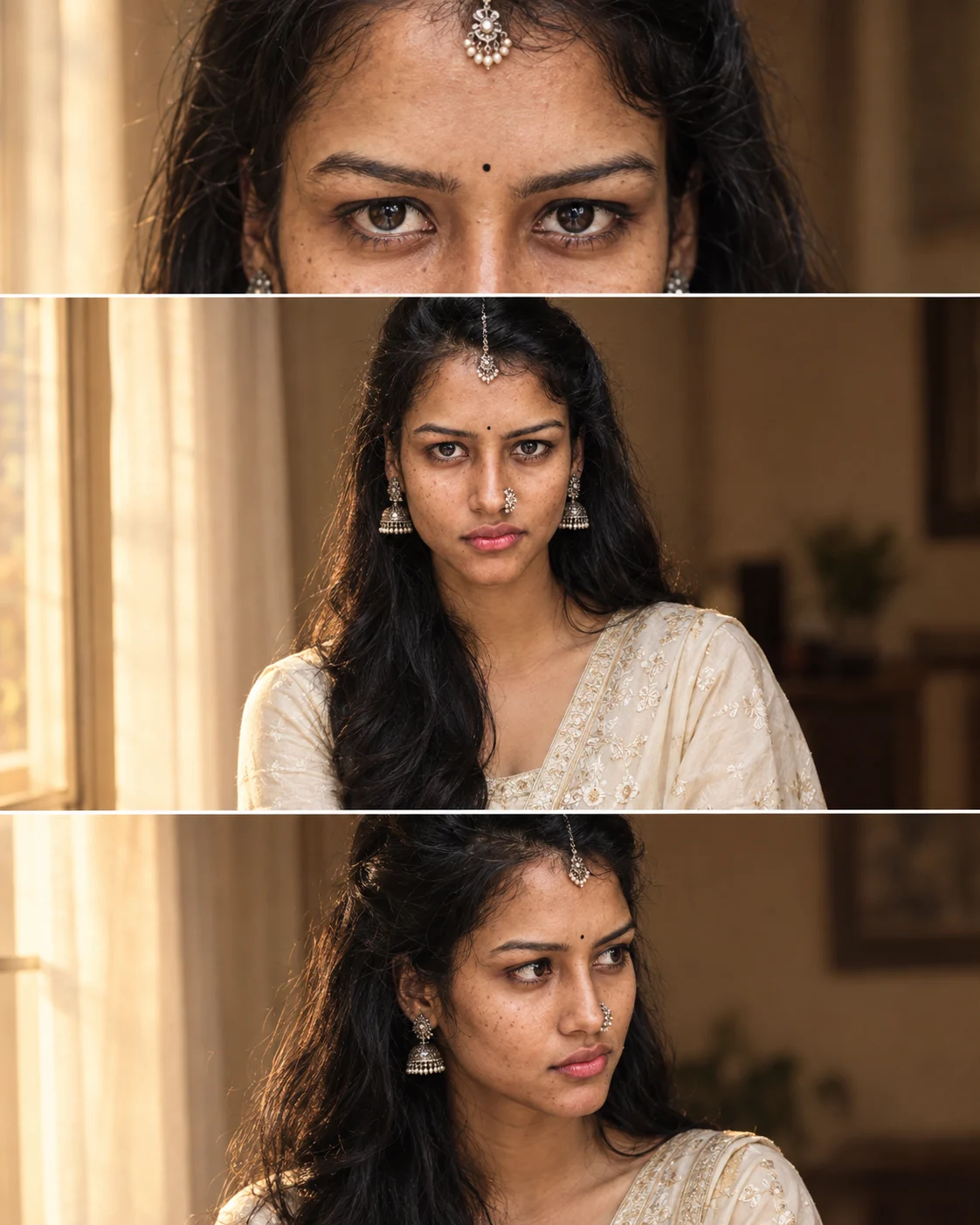
The Prompt
Using the uploaded photo, create a photorealistic three-frame traditional beauty portrait of the same person, with close-up, front-facing, and profile views that all retain the same recognizable identity. KEEP - Preserve the exact facial structure from the uploaded photo, including forehead shape, eyebrow structure, eye shape, natural eye colour, nose proportions, lips, cheeks, jawline, chin, facial proportions, and natural asymmetry. Keep the original skin tone and visible texture, including pores, fine lines, freckles, and natural marks. Preserve the original hairline, hair density, hair texture, and recognizable hairstyle pattern. Keep any existing facial hair unchanged. Preserve natural body proportions, shoulder width, neck, arms, hands, and overall build. Keep the person's identity identical across all three frames. CHANGE - Dress the person in a refined cream traditional outfit made from matte silk or lightly textured cotton-silk fabric, with subtle woven detail rather than a glossy finish. Add restrained silver Maharashtrian-style jewelry: a traditional nose ornament, silver-toned earrings, and a delicate maang tikka. Add one small black bindi centered naturally above the brows. Create three views: an upper facial close-up, a centered front portrait showing the outfit, and a lower three-quarter profile emphasizing the nose jewelry and face. Keep the styling elegant and uncluttered. SCENE - Place the person indoors beside a large window during late afternoon golden hour. Use warm cream or beige walls and softly visible curtains behind them. Keep furniture and room details indistinct and strongly blurred, with enough background structure to suggest a real interior without competing with the face. LIGHT - Use warm sunlight entering from the left side, falling naturally across the forehead, left cheek, nose bridge, and cream fabric. Add soft ambient room fill to retain detail on the shadow side of the face. Use approximately 4300–4800K so the light feels golden without making the skin orange. CAMERA - Simulate an 85mm portrait lens at f/1.8 from approximately eye height. Use compressed facial perspective and shallow depth of field. Make the upper frame tightly focused on the eyes and bindi, the center frame chest-up, and the lower frame a controlled three-quarter profile. GRADE - Use warm beige neutrals, creamy whites, muted silver highlights, natural skin tones, soft blacks, and moderate contrast. Keep the cream outfit detailed and prevent the window light from washing out the fabric. OUTPUT - Create a cohesive three-frame vertical collage in a 4:5 aspect ratio at 2048 × 2560 pixels, with clean panel separation and matching identity, wardrobe, lighting, hair, jewelry, and colour treatment. DO-NOT - No face slimming, no skin whitening, no changed eye colour, no plastic smoothing, no altered facial proportions, no face blending, no invented tattoos, no excessive jewelry, no oversized bindi, and no generic replacement face.
✦ Curated by MFDA
How to use these in ChatGPT
Open ChatGPT's image-generation experience and start a new image request.
Upload a clear reference photo of yourself before adding the prompt.
Paste one prompt card at a time so the clothing and composition don't compete with instructions from another concept.
Keep the requested aspect ratio in mind: use 9:16 for the smartphone collage and 4:5 for the editorial designs.
Check the face, hands, jewelry, fabric folds, and panel layout before accepting the result.
If the first result is wrong, regenerate with the same reference and ask for the incorrect area to be corrected rather than changing the entire look.
Getting better results
Use a sharp reference with visible facial features because a blurry or heavily filtered source gives the model less information to preserve.
Keep the requested fabric specific, such as Banarasi silk or a structured lehenga because generic clothing descriptions can produce inconsistent textures.
Give the light a direction, such as side window light or warm indoor illumination because this helps shadows and jewelry reflections stay believable.
Avoid covering the face with hair or accessories in the reference photo because important facial landmarks become harder to retain.
Use one concept at a time because mixing multiple outfits, locations, and compositions often causes the clothing or layout to drift.
Inspect hands and jewelry before choosing the final image because small accessories and finger positions are common areas for generation errors.
Regenerate instead of endlessly adding adjectives when the composition is close but one detail is wrong; a focused correction is easier to control.
When the result comes out wrong
What went wrong | Why it happens | What to change |
|---|---|---|
Face looks like a different person | The reference doesn't contain enough clear facial information, or styling changes the features | Use a sharper reference and reinforce identity preservation |
Saree looks like synthetic fabric | The model interprets the clothing too generically | Specify the silk type, woven border, folds, and natural fabric highlights |
Jewelry looks oversized or misplaced | Multiple accessories compete for attention | Keep the jewelry list specific and ask for realistic scale |
Hands or fingers look unnatural | Close-up hand poses are difficult for image models | Use a simpler hand position and regenerate the affected frame |
Collage panels repeat the same pose | The composition isn't being separated clearly enough | Define each panel by its camera distance, angle, and subject focus |
Skin looks excessively smooth | Beauty styling can override natural texture | Request visible pores, fine texture, and realistic skin rather than airbrushed skin |
FAQ
Can I use these prompts with any photo?
You can start with most clear personal portraits, but the quality of the source matters. A well-lit face with visible features gives the image model more information to work with. A tiny, blurry, strongly filtered, or heavily angled photo may produce weaker identity preservation and less reliable clothing placement.
Will my face stay exactly the same?
No image generator can guarantee a mathematically identical face in every output. These prompts put strong emphasis on preserving facial structure, skin texture, proportions, and recognizable features, but you should still inspect each result. If the face changes noticeably, regenerate using a clearer reference.
Can I change the saree color?
Yes. Saree color is one of the easiest parts to modify while keeping the overall composition. For example, you can change blush pink to emerald green, maroon to wine, or cream to champagne. Keep the fabric and border description consistent if you want the same material appearance.
Can I use these images commercially?
The prompts themselves are text instructions, but commercial use of an AI-generated image depends on the tool's current terms, the source material, and any applicable rights involving people, brands, or copyrighted designs. Check the current ChatGPT terms and the rules that apply to your intended use before selling or advertising an image.
Is ChatGPT free for these images?
Availability and image-generation limits can depend on the ChatGPT plan and current product rules. A free account may have different limits from paid plans, so check the current options shown in your account rather than assuming every image feature has unlimited free access.
Why does the clothing change my face?
Heavy makeup, jewelry, hair covering the forehead, and dramatic lighting can all alter how the model interprets facial features. Keep the reference face clear and make identity preservation a priority. If the clothing is correct but the face drifts, regenerate rather than adding more fashion details.
Closing
These four looks give you different ways to use traditional styling without turning every result into the same portrait. Start with a clean reference photo, choose one concept, and check the face before judging the clothing or lighting. The biggest limitation is identity consistency: even a detailed prompt may need more than one generation to get the right result.
Tags
About the Author
Naziya
Creative AI writer at MFDA, sharing trendy photo-editing prompts and fresh ideas for beautiful, stylish AI images.